Singapore distances look small on a phone and feel large on a pavement at 2pm. The question is rarely "what does the map say". It is whether you will arrive dry, on time, and without spending $28 to sit in the same traffic the bus is already moving through. Walking, Grab and the bus are not moral categories. They are tools, and the weather, the hour and the bags decide which one is less stupid.
Residents who look calm in town are not fitter. They have a rule for each situation and they do not reopen the debate at every junction.
Heat first, then the map
A kilometre in March at 8am is a stroll. The same kilometre at 1.30pm along a sun-baked arterial is a bad idea with a laptop. Shade is the real unit. Five minutes under a mall linkway is free. Five minutes on a flyover with no trees is a shower you did not pack for.
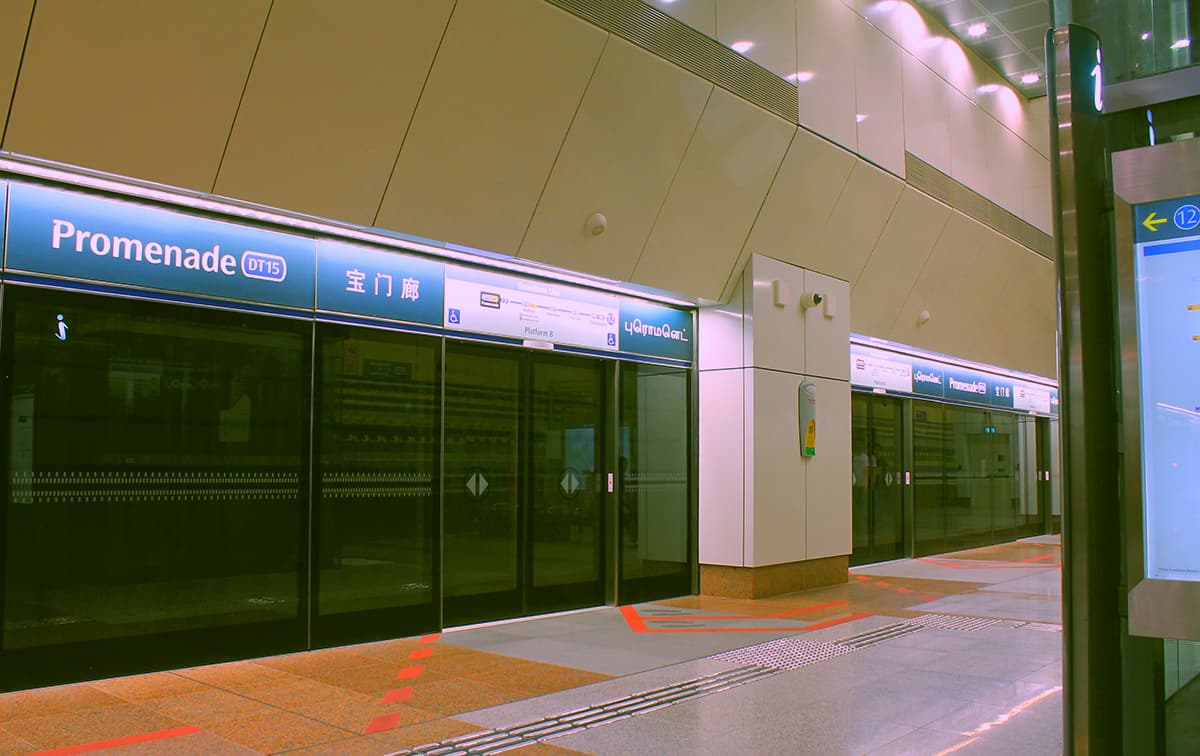
Walk when the path is covered or tree-lined, the distance is under about ten to twelve minutes, and you are not in office clothes you cannot replace. The CBD and the civic district are full of these hops: from one Circle Line station to an office that is "only" 600 metres away, from a Downtown Line exit to a food centre two blocks off. The train would add a wait, a tap, and a walk at the other end that is almost as long. The bus would sit at the same lights you are crossing.
Do not walk when you are already hot, the next stretch is an open bus stop desert, or you are crossing an expressway landscape that was designed for cars. HarbourFront to the Southern Ridges climb is a walk with a purpose. HarbourFront to a meeting in the west via the roads is how you invent a Grab.
Water changes the calculation. If you would not send a child across that stretch without a bottle, do not send your 2pm self. The haze and heat days shrink walkable distance to "until the next mall". Pride about not using a car is cheaper than heat exhaustion, but it is not cheaper than a $1.50 bus.
Umbrellas are not shade. They are a moving oven. A covered walkway beats an umbrella on a 33°C afternoon; use the walkway even if it adds eighty metres.
Peak traffic, ERP, and why the bus-plus-MRT exists
Grab is a car. In the morning peak and the evening peak it sits in the same ERP-adjacent mess as every other car: CTE, ECP, PIE ramps, the CBD grid, the last 400 metres to a pickup point that is "temporarily closed for works". Surge pricing is the app being honest. A $24 ride to travel 4 km in 35 minutes is not a convenience; it is a receipt for a poor choice.
The combination that beats it, more days than not, is a bus to an MRT station plus a train. Bus lanes, however imperfect, still move. The MRT does not care that the CTE is a car park. Your job is to pick an interchange that is boring: a station you already know the platform for, a bus that comes every six minutes rather than every eighteen.
Short CBD hops in a car are the worst version of this. Raffles Place to Tanjong Pagar at 6.15pm is often faster on foot, or one stop on the East–West Line, than any booking that has to loop a one-way. The pickup point will be two streets away because the building kerb is a no-stopping zone. You will walk anyway.
Off-peak, Grab earns its keep: late morning between two heartland estates that the bus connects with a 25-minute detour; a parent with a folding chair and a grandchild; three colleagues splitting a fare that is still less than three tired buses. Use it then without guilt.
Buses alone win on corridors that are already a bus city: along the east-coast stretch, through some new towns, anywhere the MRT would force you three sides of a triangle. The app arrival time is more useful than a printed frequency in your head. If the bus is 11 minutes away and the walk is 9, walk. If the bus is 3 minutes away and the walk is 9 in the sun, wait in the shade.
Exact fare if you still pay cash on a bus; a SimplyGo tap if you are a person who lives here. Standing at the front rummaging for coins is how the whole corridor loses a minute.
Rain, last trains, and the late-night version
Rain is not one thing. A five-minute cell is a bus shelter and a joke. A two-hour storm is a rewrite. Walking in that is how you destroy a work bag. Grab surges because everyone had the same thought at the same lightning flash; the wait can be 15 minutes in a doorway you do not want to stand in. The bus, if it is a high-frequency service, is often the adult move: you are already near a stop, it is coming in four minutes, and it does not cancel because of demand.
Covered linkways change everything. Towns that were planned with them — parts of Punggol, Tampines, the civic district — stay walkable in rain. Older stretches with a monsoon drain and no five-foot way do not. This is the same logic as a rainy-day plan that is not a mall: use the cover you have, then switch mode, do not invent a scenic walk.
After the last train, the menu shrinks. Night buses exist on some corridors and they are slower than you remember and cheaper than a car. Grab is the default when there are two or more of you, when it is a heartland that the night bus treats as an afterthought, or when someone has been drinking. Walking home from a city supper is plausible in some neighbourhoods and unwise along a pitch-dark arterial. Late-night eating should include the ride home in the bill, mentally, before you order the second plate.
Lightning is the override. Get indoors. A bus interchange is indoors. A Grab pickup on an open kerb is not a plan; wait for the cell to pass. The app will still be there.
If you are arguing about $6 versus $22 while standing in the rain, you have already spent the $16 in mood.
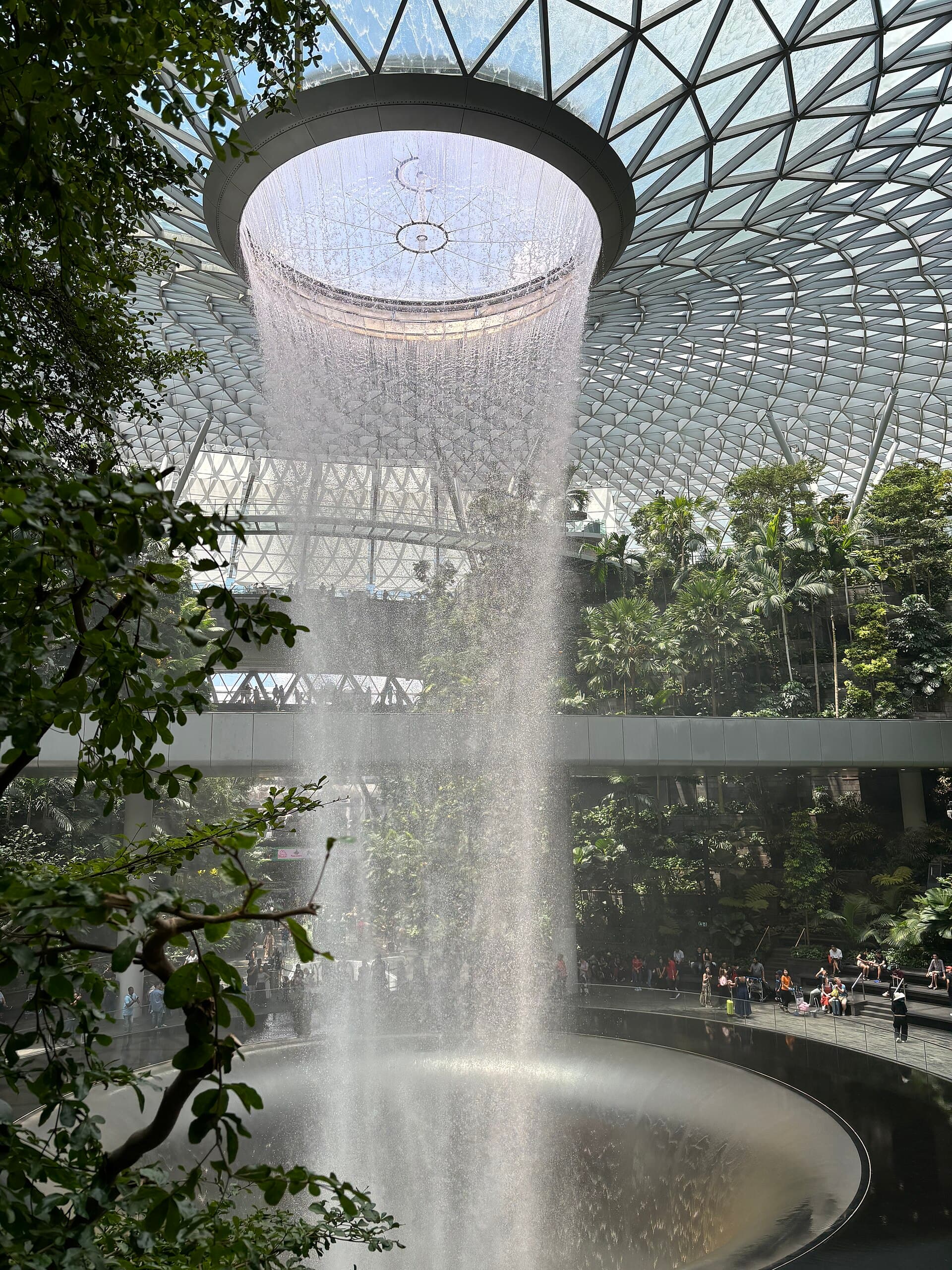
Public holidays scramble frequencies. Buses thin. Grabs surge toward the popular beaches and the Jewel car parks. Walking remains free and hot. Check the MRT last train earlier than you think; Sunday and holiday first trains also start later, which ruins the "we will just take the 5.40" idea.
A working rule you can keep in your pocket
Walk: under twelve shaded minutes, no heavy bags, weather behaving.
Bus: the stop is close, the wait is short, or the corridor is a bus corridor. Combine with MRT when the car alternative is a peak-hour fantasy.
Grab: bags, children, lightning aftermath, missed last train, three people, or a cross-island hop that the rail network turns into an essay.
MRT: the default spine. Everything else is how you join it or how you leave it.
Apply the rule before you open three apps. The people who look like they "just know" are not lucky. They stopped treating every journey as a fresh optimisation problem. Heat, rain, peak, bags. Choose once, move, drink some water. The city is small only if you pick the mode that keeps it that way.