Sunday in the east still has a shape, even after Joo Chiat became a place people photograph on the way to somewhere else. You eat laksa while the gravy is still a threat to your shirt. You walk it off at East Coast Park. You argue, mildly, about whether the noodles should have been cut. Then you go home and pretend you will cook dinner.
Katong laksa is part of that shape. It is not a secret, and it does not need a founding myth to be worth eating. What it needs is a clear bowl, a plan for the park, and an honest view of how you will get there once every other household in the east has had the same idea.
What people mean when they say Katong laksa
Laksa in Singapore is already a split family: gravy that is coconut-heavy and fragrant with laksa leaf, versus versions closer to what you find in other towns. Katong laksa, as it is sold along East Coast Road and the Joo Chiat stretch, is the coconut version served with vermicelli cut short enough to eat with a spoon. No chopsticks. The cut is the tell. It is also the thing visitors ask about as if it were a riddle.
It is not a riddle. Short noodles make a hawker bowl faster to eat at a small table. They also lock the dish to a set of stalls that have been using the Katong name since the late twentieth century. Several of those stalls have spent years in public disagreement about who started what. That disagreement is a business story. It is not a cooking lesson.
What you can usefully notice in the bowl: the coconut milk should taste cooked, not raw and split. The gravy should coat the spoon. Prawns should be present, not decorative. Cockles, if you still eat them, are a yes-or-no question you ask at the counter, not a surprise. Laksa leaf on top should smell like laksa leaf. Chilli is usually a separate dollop so you can decide how much of your afternoon you are willing to lose.
A bowl in 2026 is commonly $6 to $9 depending on the stall and whether you add extras. That is lunch, not a tasting menu. If you want a second dish, get something dry from a neighbouring stall rather than a second soup. You will be walking later.
The origin story will not thicken the gravy. The coconut will.
Eat on a stool if that is what the stall has. Katong and Joo Chiat still have the old five-foot-way setup as well as air-conditioned copies. The gravy does not care. Your trousers will.
Joo Chiat before the park, without the walking-tour voice
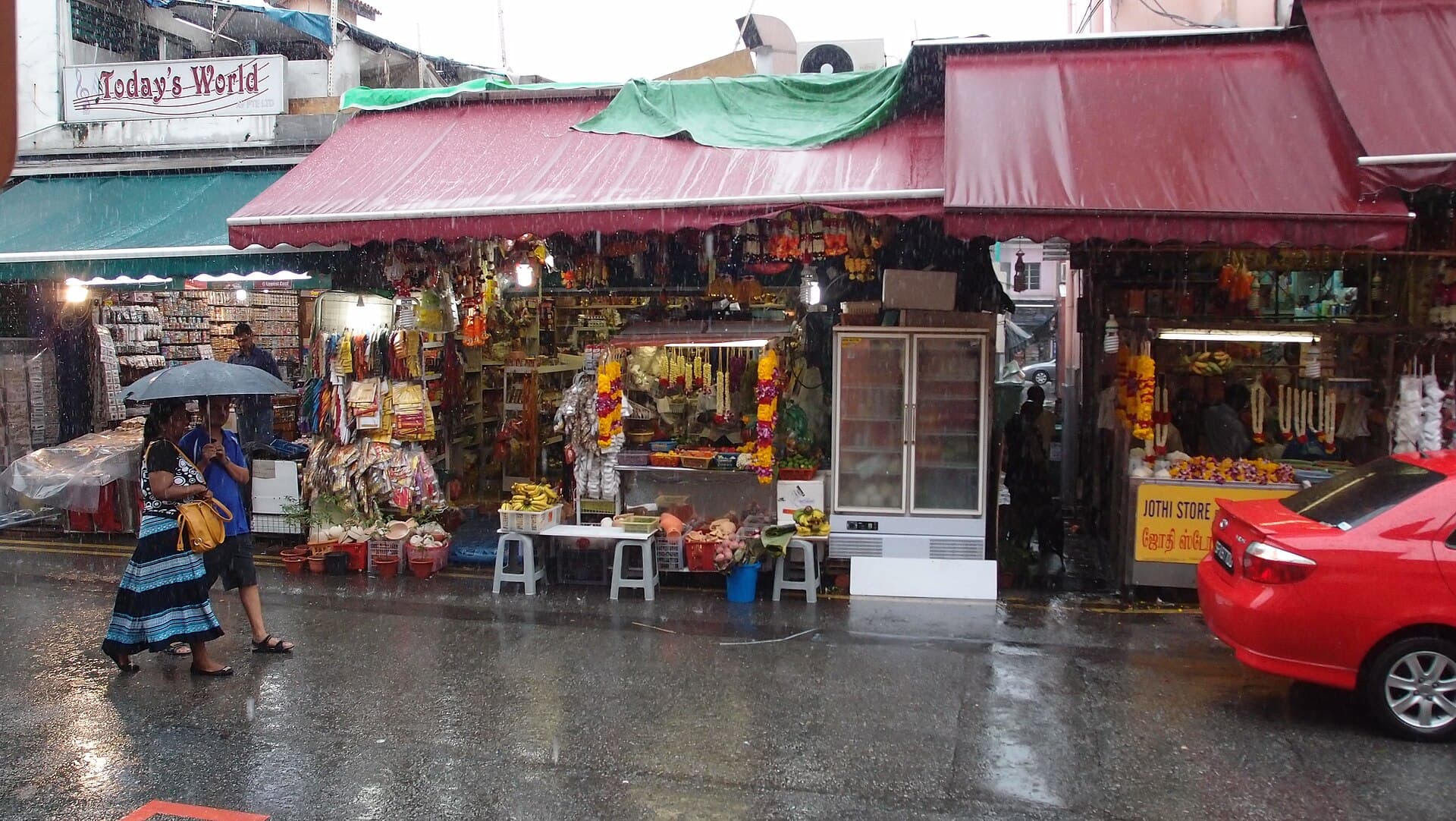
The useful way to treat the neighbourhood is as a lunch district that happens to have Peranakan shophouses worth walking past, not as a heritage trail that happens to serve noodles. Come up from Marine Parade or Dakota on the Circle Line, or from Marine Terrace or Tanjong Katong on the Thomson-East Coast Line, and walk. East Coast Road on a Sunday morning is already a procession of prams, Grab cars and people looking for the same four stalls.
If you live in the east, you already know which kopitiam you will use when the famous bowl has a queue onto the pavement. If you do not, walk a block off the main road before you commit. Joo Chiat Road and the side streets still have coffee shops that serve laksa without a caption. The cut noodles may be missing. The coconut may be better. You are allowed to prefer that and still call the afternoon a Katong Sunday.
Do not invent a timeline in your head about Peranakan cooks and a single shophouse. The district has a real Peranakan and Eurasian history; it also has decades of Chinese hawkers, later restaurants, and a lot of renovation. Laksa here is a local habit that got a place-name attached. That is enough.
East Coast Park after the bowl
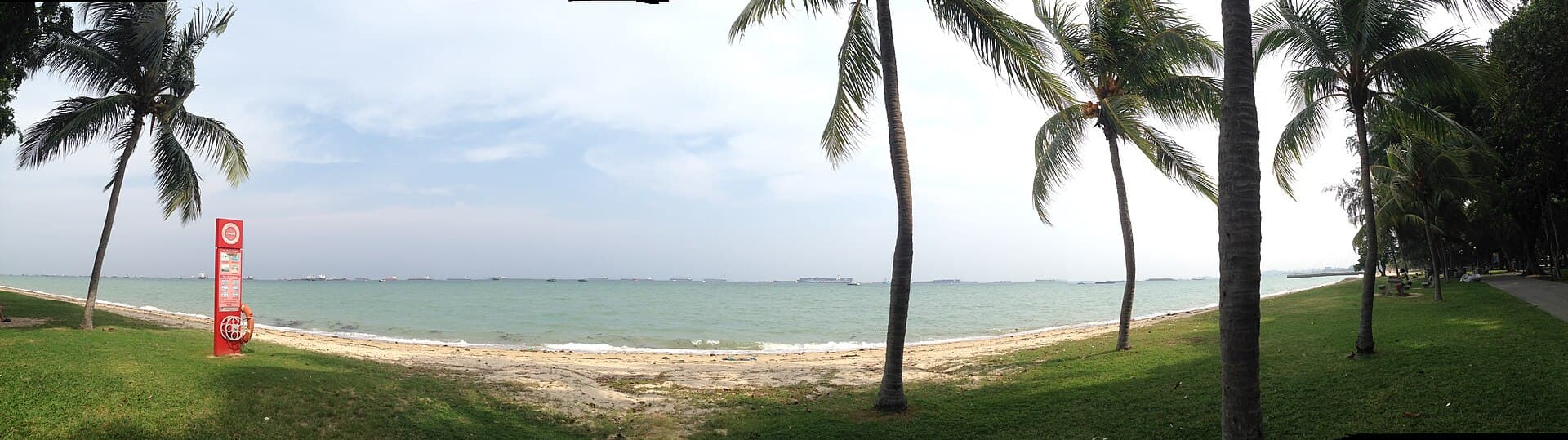
The park is why the lunch works. You are full, a bit sweaty, and thirty minutes from a sea breeze that does not care what you ordered. East Coast Park is not wilderness. It is a long municipal coast with barbecue pits, rental bikes, toilets, and enough runners to remind you that other people planned their Sunday better.
Walk from the Katong and Marine Parade edge toward the park connectors and you can be on the sand without getting back in a car. If you want to ride, the park connector network is the grown-up version of this afternoon: rent or bring a bicycle, stay off the pedestrian line, and accept that Sunday from 4pm is a procession. The laksa is better as fuel before a gentle ride than as a boast after a hard one. Coconut gravy and sprint intervals are not friends.
Swimming is a personal calculation. The water is there. So are the flags, the boats, and the afternoons when the sky turns over in twelve minutes. If rain is already in the forecast, read how to spend a wet day without defaulting to a mall and decide whether the park is still the point. A shelter at East Coast Park during a squall is a fine place to sit. It is a poor place to be heroic.
Bring water. The laksa was a salt delivery system. The drinks stall at the park food village will sell you another sweet cup if you let it.
Parking, MRT and the Sunday tax
Driving to Joo Chiat for lunch and then to East Coast Park for a walk is the plan everyone has. That is why it fails. Street parking on East Coast Road fills by late morning. The park carparks fill when the weather is good. People circle. People get rude. The laksa is not improved by twenty minutes of this.
East Coast station on the Thomson-East Coast Line is the honest public option for the park itself, with buses along the coast if you do not want to walk the last stretch. For the laksa, the Marine Parade and Tanjong Katong area stations put you closer to the bowls than to the sand. Doing both in one Sunday means a walk or a short bus between food and park. Budget that time. It is still less than a carpark queue that does not resolve.
Grab makes sense if you are a group, if someone has a folding chair, or if the sky is already wrong. It does not make sense as a default for two people who can walk. The east is flat. That is the whole gift.
How to keep the Sunday from becoming a production
Pick one stall. Do not tour three laksa counters and call it research. Your stomach will file a complaint at the park. Order the standard bowl first; add cockles or extra prawns only if you already know you want them. Eat. Pay. Leave the pavement space for the next table.
If the queue is a theatre queue — phones out, nobody moving — walk. The east is not a desert. Another coffee shop will sell you coconut gravy without a wait that eats the afternoon. Save the famous name for a weekday evening if you must have it; Sunday is for the park.
After the walk, you can go home via a supermarket run or a second drink in Joo Chiat. You can also stop. The temptation to turn a simple lunch-and-coast into a full east-side itinerary is how you end up tired, sticky, and still talking about parking. Katong laksa is a bowl. East Coast Park is a long park. Together they are a Sunday. That is already enough to organise a week around.