Singapore cooks with pork the way some cities cook with butter. It is in the economic rice tray that looks like cabbage. It is in the wok that fried your kangkong. It is in the wanton mee that otherwise seems safe. If you do not eat pork — because you are Muslim, Hindu, Buddhist, vegetarian, or simply tired of it — you already know the labour of eating out. This is a field guide to that labour, not a promise that every hawker centre will meet you halfway.
The useful skill is not finding a single "best vegetarian stall". It is knowing which counter can answer a precise question, and which counter will smile, say yes, and still send you a plate that has been through the lard tin.
What the words mean at the stall
Vegetarian, at a Chinese hawker stall, is an unstable word. It can mean no meat you can see. It can mean no animal flesh but still fish sauce, oyster sauce, egg and shrimp paste. It can mean a Buddhist kitchen that avoids garlic and onion as well as meat. You will not get the right plate if you only say "vegetarian" and hope.
No-pork is a different request. Plenty of Singaporeans eat chicken, fish and beef and still need the pork and the lard out of the way. "No pork, no lard" is the phrase that land. Follow it with the dish. "This kangkong, no pork, no lard, can?" is better than a speech about your diet.
Halal is a third category. A stall with a halal mark has gone through a certification process. A stall that "doesn't use pork" is not the same thing. If you are ordering for someone who requires halal, do not translate their need into a Chinese uncle's nod. Walk to the marked stall.
Cross-contamination is the part people lie about, including to themselves. A shared wok, a shared ladle, a cutting board that just did char siew: these are normal. Some vegetarians accept that. Some cannot. Be honest with yourself first, then with the stall. An uncle who says "cannot, we fry everything inside here" has done you a favour. An uncle who says "can, can" while standing over a pork rib tray has not.
Ask about the oil and the sauce, not only about the meat. The meat is the easy part to see.
Economic rice, zi char and the trays that lie
Economic rice — cai png — is the everyday test. The trays are labelled in your head, not on the glass. Luncheon meat, roast pork and minced pork are obvious. The quieter problems are cabbage with lard, beans with dried shrimp, and a tofu that was braised with meat stock. Point to three dishes and ask about each one. "This one pork? Lard?" Do it without apology. The stall serves two hundred people who ask less precise questions.
A typical no-pork cai png plate — rice, egg, a vegetable, a tofu — still lands around $3.50 to $5.50. You are not asking for a special menu. You are asking the stall to tell the truth about trays they already cooked.
Zi char is harder. The menu is a list of possibilities, not a list of clean woks. Sweet and sour dishes, sambal kangkong, tofu claypot: all of them can be built without pork, and all of them can pick up lard from the station. If the restaurant is not halal and not vegetarian, assume the default is pork-friendly. Order dishes that are obviously chicken, fish or egg, and say the restriction in the first sentence, not after the uncle has started the wok.
Hawker noodle stalls are a mixed bag. Fishball noodles can be fine if the sauce is not lard-based; many are. Wanton mee is usually not, because of the char siew and often the oil. Prawn mee is prawn, which helps, until the stock also has pork bones. Ask. If the answer is a shrug, pick another stall. There is always another stall.
Indian vegetarian, Chinese vegetarian, and the stalls that already decided
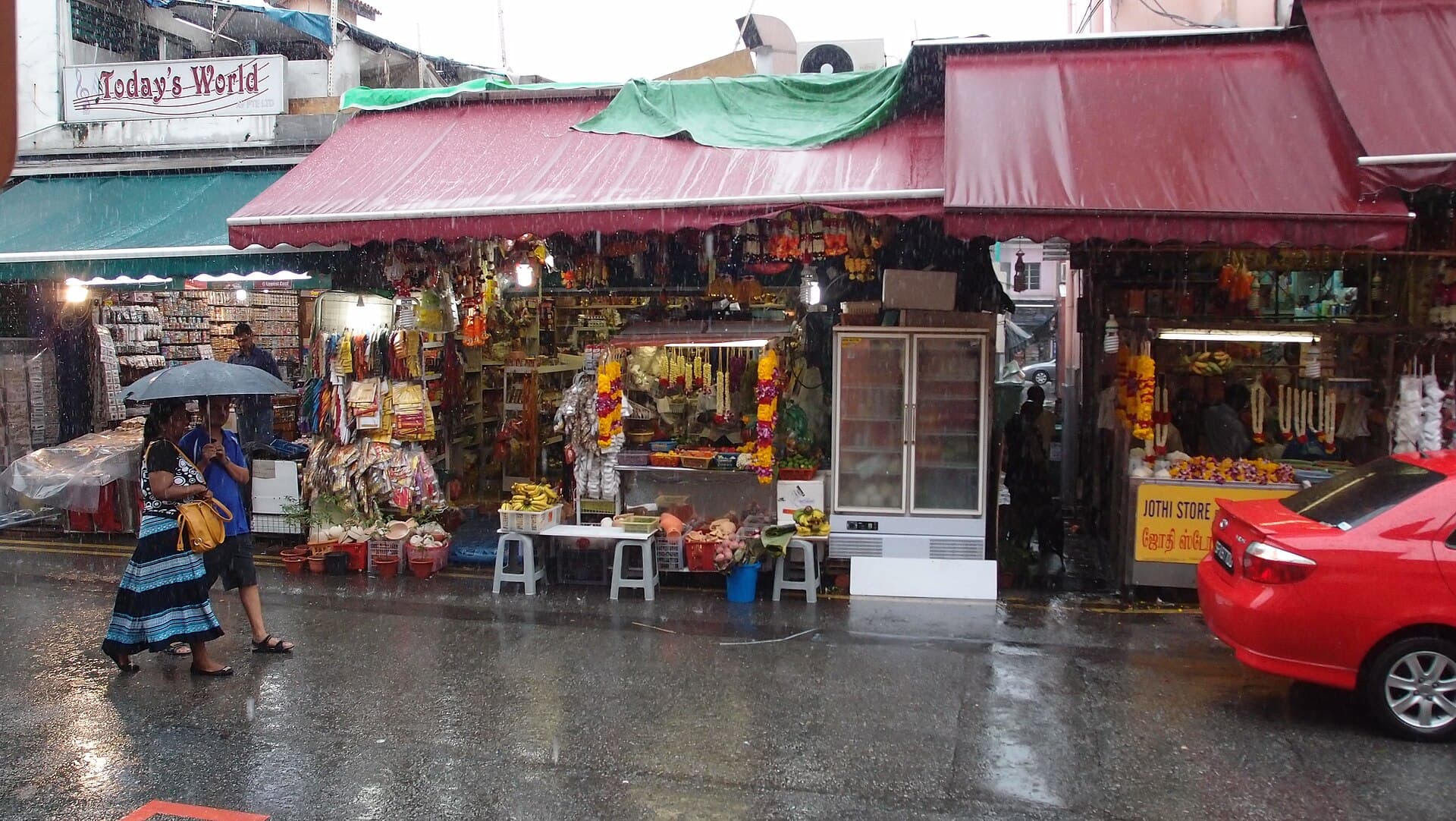
Indian vegetarian stalls are the most straightforward lunch in this city if you do not eat meat. The thali or banana-leaf logic is already meatless. You are choosing how spicy, whether you want the yoghurt, and whether the prata stall next door is separate enough for your rules. Little India on a weekday morning and Tekka's cooked-food floor concentrate this option. You can eat quickly, cheaply, and without a fifteen-second negotiation at every tray.
Chinese vegetarian stalls — often signposted with a 素 or a bright green board — do mock meats, curries, and economic rice that was designed for the brief. Some are Buddhist-strict. Some use egg. Read the sign. The mock roast pork is an acquired texture and a useful way to eat with colleagues who are having the real thing two stalls down.
Halal stalls, including many Indian-Muslim and Malay stalls, solve the pork problem by construction. They do not solve vegetarianism. Mee rebus has prawn or beef stock more often than you think. Nasi padang can be a fish-and-vegetable meal or a beef-heavy one. You still have to point and ask. You just do not have to ask about pork.
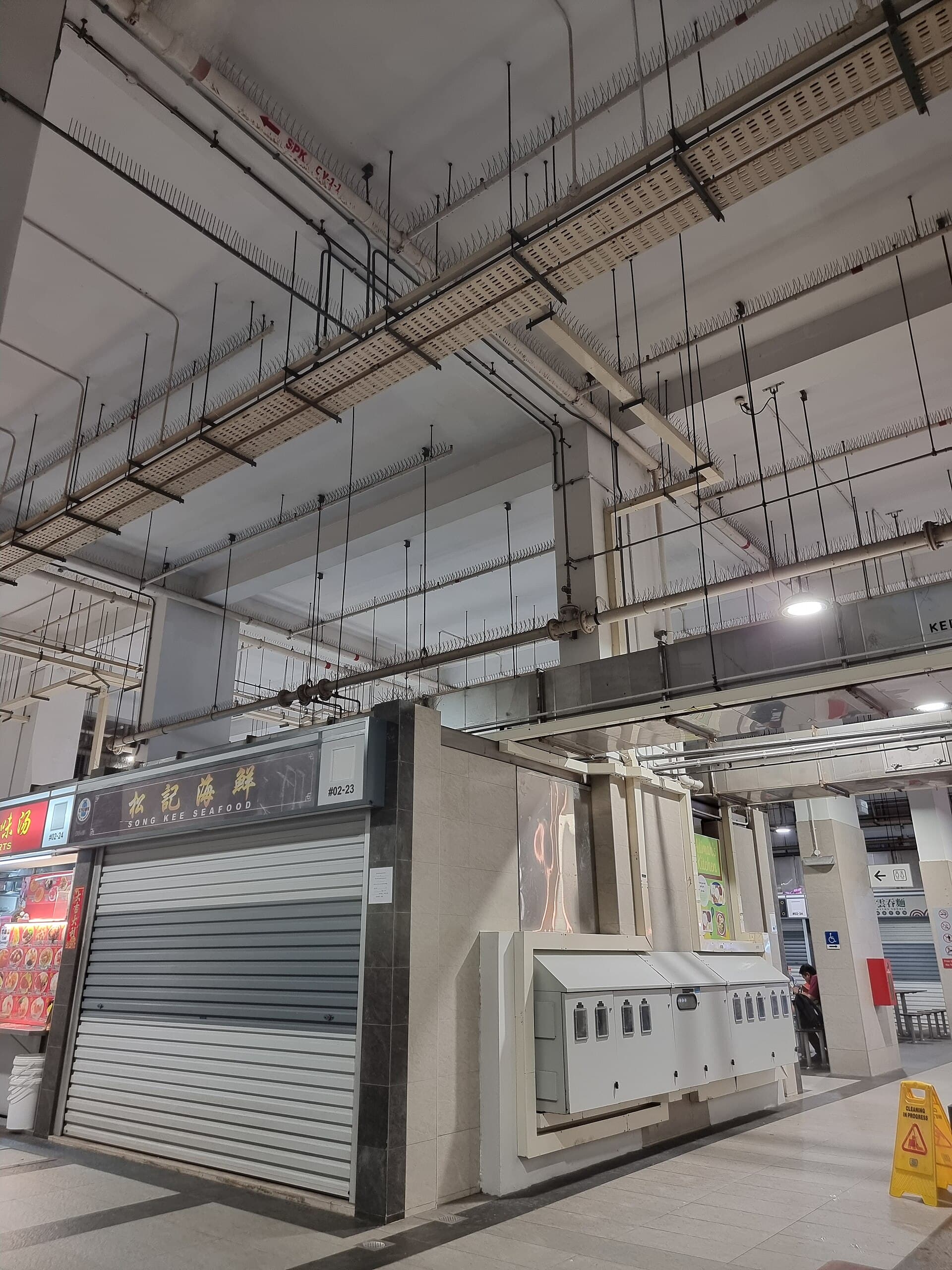
Tekka is the building to use when you are tired of asking. Downstairs is the wet market; upstairs and around are cooked-food options that skew Indian, Malay and vegetarian-friendly. Go before the weekday lunch crush if you want a seat. Take the same hawker centre habits you would anywhere else: order at the stall, share tables, return the tray.
How to ask so you get a usable answer
Use full, simple sentences. "I cannot eat pork or lard. This dish can or not?" works in English. The same sentence works in Mandarin or Malay if you have it. Do not mime. Do not say "I'm on a diet". Diets get you a smaller portion of the same pork.
If you are with colleagues, say the restriction before anyone orders a shared platter of kong bak or a claypot that cannot be split. Group zi char is where no-pork eaters get stranded with rice and a fried egg. Suggest a second stall, or a fish dish that can sit in the middle.
For vegetarian friends who also avoid onion and garlic, say so. A lot of Indian vegetarian food is fine; a lot of Chinese vegetarian food is not. For friends who eat egg and dairy, say that too, or you will watch them refuse a perfectly good omelette.
Do not lecture the stall about animal welfare in the lunch queue. Do not take a photograph of the pork tray as evidence. This is a workplace. You are buying lunch.
Building a rotation that does not exhaust you
The people who eat this way for years do not improvise every day. They have a cai png stall whose trays they already know, a vegetarian stall near the office, a halal chicken rice or nasi stall for days when they want meat, and a Tekka or Little India option for when they want to stop thinking. Add a supermarket salad only when all of those have failed. The city is pork-heavy. It is not pork-only.
Weekend wet markets help if you cook. You can buy vegetables, tofu, fish and spices without walking past a roast-pork display if you choose the aisle on purpose. That is a different article's problem. For eating out, the win is smaller: one clear question, one honest answer, one plate you did not have to send back.
You will still get the wrong dish sometimes. Send it back without a scene if the pork is visible. If the problem was the oil and you only discovered it mid-mouthful, finish or don't, pay, and strike the stall off the rotation. That is not rudeness. That is how a pork-heavy city stays edible.