Hawker centres reward people who already know the choreography. You walk in, you read the room, you claim a seat, you order at the stall, you eat, you return the tray. The gap between a regular and a visitor is not taste. It is whether you treat the centre as a restaurant or as shared municipal infrastructure.
This is the version you use when you live here: meeting a colleague at Maxwell after a Tanjong Pagar meeting, dragging the in-laws to Chinatown Complex on a Saturday, or getting cai png at Margaret Drive without performing for anyone.
Chope first, then stand in the right queue
In a packed centre at 12.20pm, an empty table is a rumour. The local move is still the tissue packet: drop one on the table, sometimes with an umbrella or a name card, then join the queue. It is not elegant. It works because everyone else is doing the same thing and because the alternative is six people circling like carpark hunters.
A few rules keep chope from becoming anti-social. Do not chope four seats for two people at a 1pm office crush. Do not leave a packet and wander to another block. If the centre is half empty, just sit. If someone has already chopped the table, leave their tissue alone.
Once you have a seat, go to the stall. You order at the counter, you pay, you collect or you wait for a number. You do not sit down and expect table service, except at drinks stalls, where the kopi uncle will often take the order at your table and send a cup later. The chicken rice queue is a standing queue; the drinks station is a circulating one.
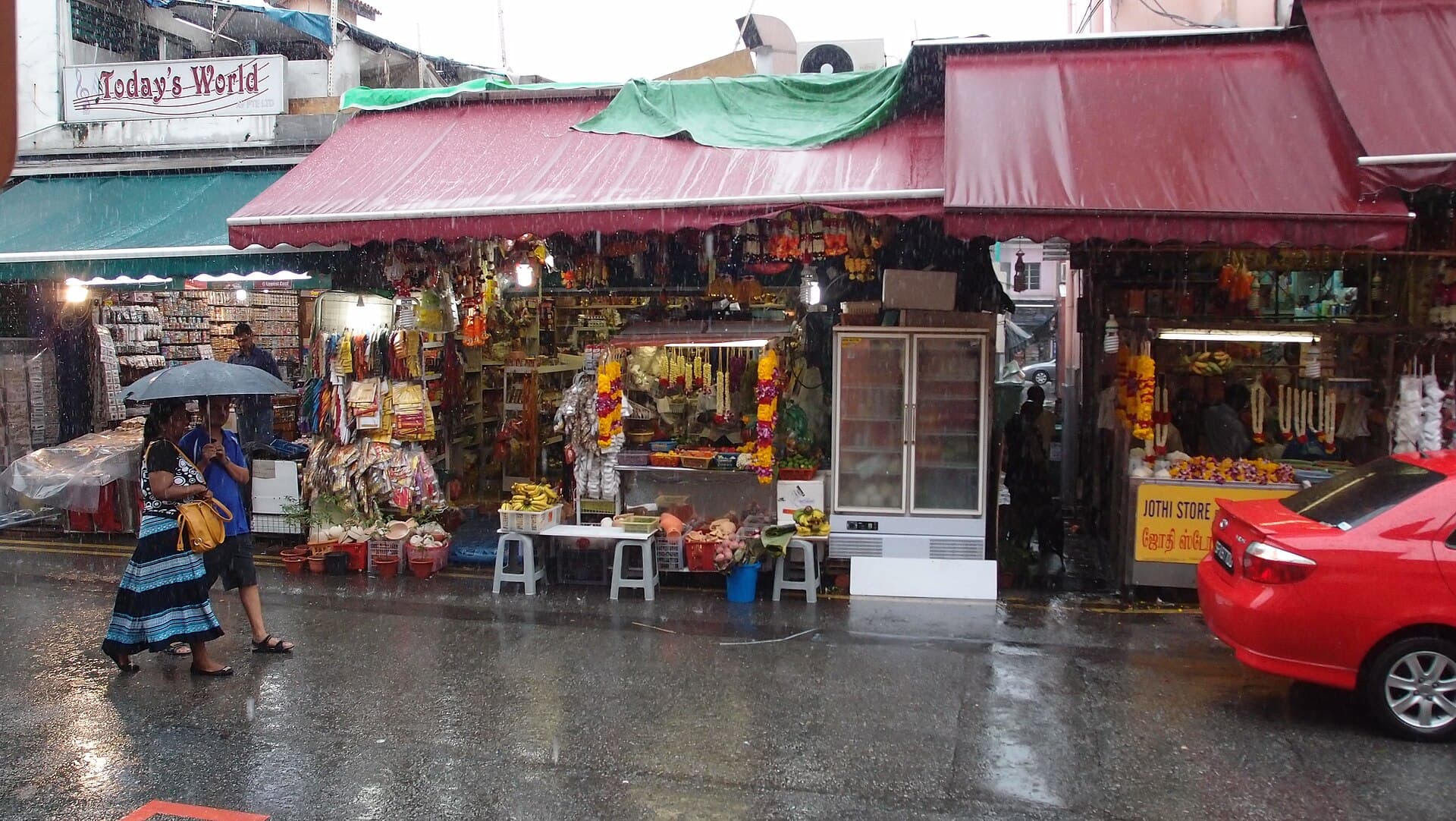
If you are new to a centre, walk a full loop before you commit. The stall you saw from the entrance is rarely the one with the shortest wait. At Chinatown Complex the downstairs wet market and the upstairs cooked-food floor are different worlds; at Margaret Drive the second floor is where you eat, and the circulation is built around that. The same split shows up across older complexes: produce and wet floors below, cooked food above. Wear shoes you can wash. The tiles will be damp even if it has not rained.
Cash, PayNow, NETS and the stall that only takes notes
Payment is the fastest way to announce that you do not eat here often. Some stalls take only cash. Some take NETS. A growing number show a laminated PayNow QR taped above the chilli. A few take all three and still prefer a $2 note because the QR terminal is "for later". Carry small notes. A $50 for a $4.50 plate of wanton mee is a conversation you do not want at 12.40pm.
PayNow is not a personality. Scan, check the stall name matches the board, pay the amount on the ticket, show the confirmation if asked. Do not narrate the transfer. Do not ask about credit cards.
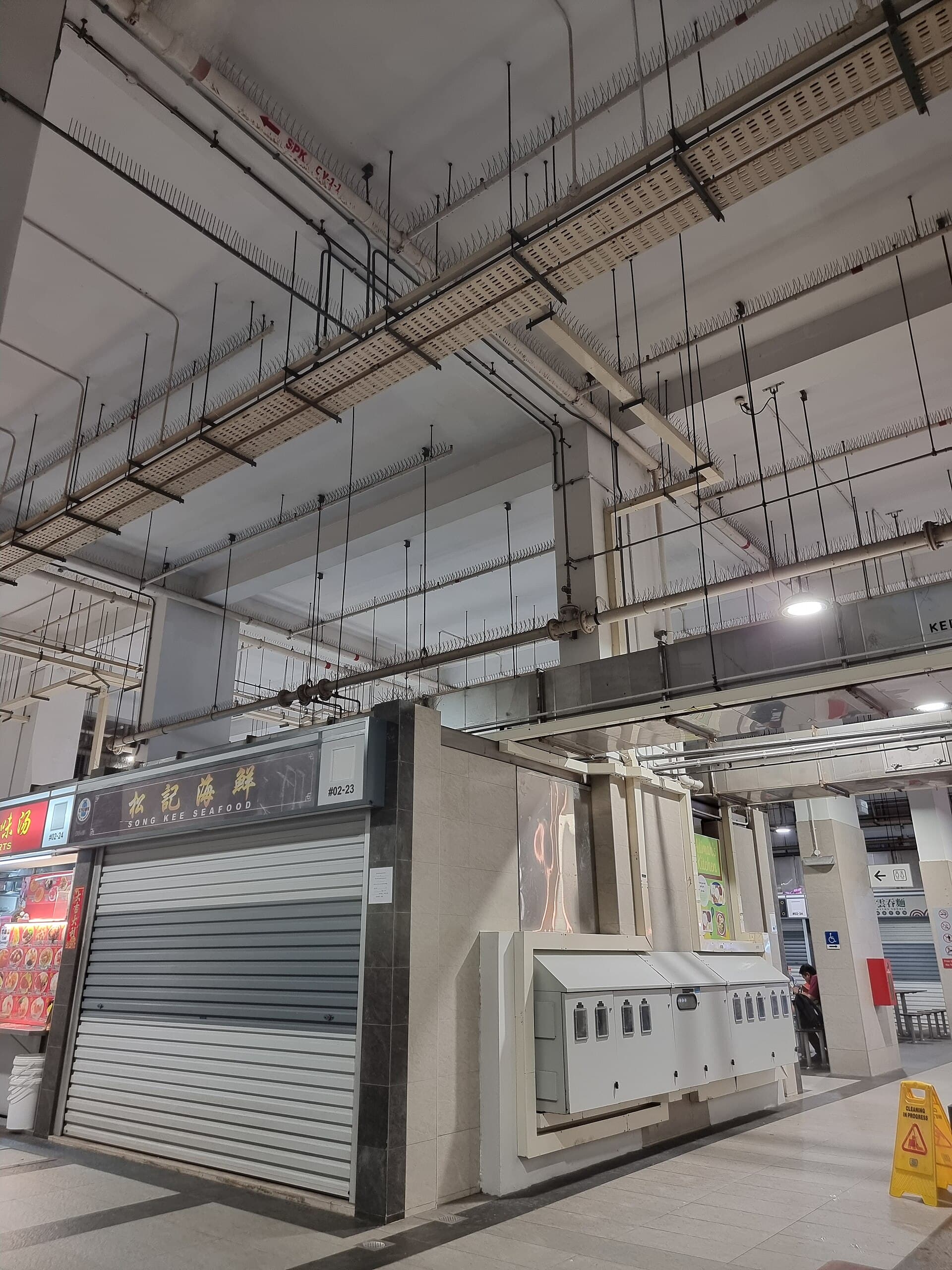
Closed days matter more than payment. Hawkers rest. Many take Monday. Some take Tuesday. Some close when the family goes back to Malaysia for a long weekend. The honest way to check is the handwritten sign on the shutter, the centre's directory board, or a regular who already knows. Google hours for individual stalls are often wrong by a day. If you are crossing town for a specific plate, have a second stall in mind in the same building. At Maxwell that might mean switching from the famous chicken rice queue to a quieter roast-chicken stall two rows over. At Chinatown Complex it might mean giving up on one wanton mee and walking twenty metres.
The closed shutter is not a mystery. It is the one weekday the family has had to themselves since the 1980s.
Sharing tables without making it weird
Sharing is normal when the centre is full. You ask, "Excuse me, anyone sitting here?" You put your tray down. You do not reorganise their plates. You do not start a conversation unless they start one. You eat, you leave, you wipe obvious spills with the tissue you brought.
What looks touristy is hovering with a tray over someone who is mid-mouthful, or taking the seat of a person who has gone to collect drinks. Look for the tissue. Look for a phone and an umbrella. If the table has unfinished soup and no people, wait thirty seconds before you assume it is free; someone is at the drinks stall.
Tray return is no longer optional in centres that have installed stations. Stack bowls so leftover gravy does not flood the tray. Put chopsticks and spoons in the cutlery slot if there is one. The cleaners are not invisible staff in a hotel; they are the reason the table is free ten minutes later. In older centres without a station, pile your crockery at the corner of the table the way the regulars do, not scattered across every seat.
Photograph the food if you must. Do not photograph the people at the next table, the uncle's hands, or a child in school uniform. If you need a picture of the room, take it from the aisle after lunch, not in someone's queue.
Reading Maxwell, Chinatown Complex and Margaret Drive
These three buildings teach different habits.
Maxwell Food Centre sits at the edge of the CBD, a short walk from Tanjong Pagar on the East-West Line or Chinatown on the North East and Downtown lines. Weekday lunch is office workers who know which queue moves. Weekend late morning is a different crowd, longer cameras, slower decisions. If you want the chicken rice argument in its natural habitat, go on a Tuesday at 11.40am, not on a Saturday at 1pm behind a tour group. The drinks stall logic still applies: sit, order kopi, let it arrive.
Chinatown Complex is a wet market with a cooked-food floor stacked on top. You smell the fish before you see the chicken rice. Downstairs is for people buying lunch ingredients on the way home; upstairs is for people who have already given up on cooking. The floor is wet. The tables are shared more aggressively than at Maxwell because the density is higher and the tourist overflow from Pagoda Street is real. If you are eating vegetarian or no-pork in a pork-heavy building, read the stall sign twice and ask in a full sentence. "No pork, no lard" is clearer than "Is this vegetarian?"
Margaret Drive is the estate version: a neighbourhood centre that happens to look good in photographs. It is useful because it is not a destination. You go because you live in Queenstown or you are meeting someone who does. The queues are shorter and the closed-day pattern is obvious once you have been three times.
In all three, the drinks stall is the social hinge. If you want the breakfast version of that habit, the kopi lexicon is the other half of this education. If you want the produce half, go downstairs early and treat Tekka, Tiong Bahru and Geylang Serai as the same building type with different hours.
Leaving like someone who will come back
Finish. Return the tray. Take the tissue you used to chope. Do not leave a full packet as litter and call it atmosphere. If you spilled chilli, wipe it; the next person should not sit in your lunch.
Peak times are not mysterious. 11.30am to 1.30pm on weekdays is office lunch. 6pm to 8pm is dinner in estate centres. After that, many stalls start packing up even if the lights are still on. If you need food after the last train, a hawker centre is the wrong mental model; that is a late-night eating problem, with a different map and a different set of manners.
One more thing that marks a regular: you do not announce that a stall has "gone downhill". You just go to the next one. The centre is a workplace with fluorescent lighting and a shared dishwasher. Treat it that way and you will look like you belong, even if you still have to ask what "siew dai" means.