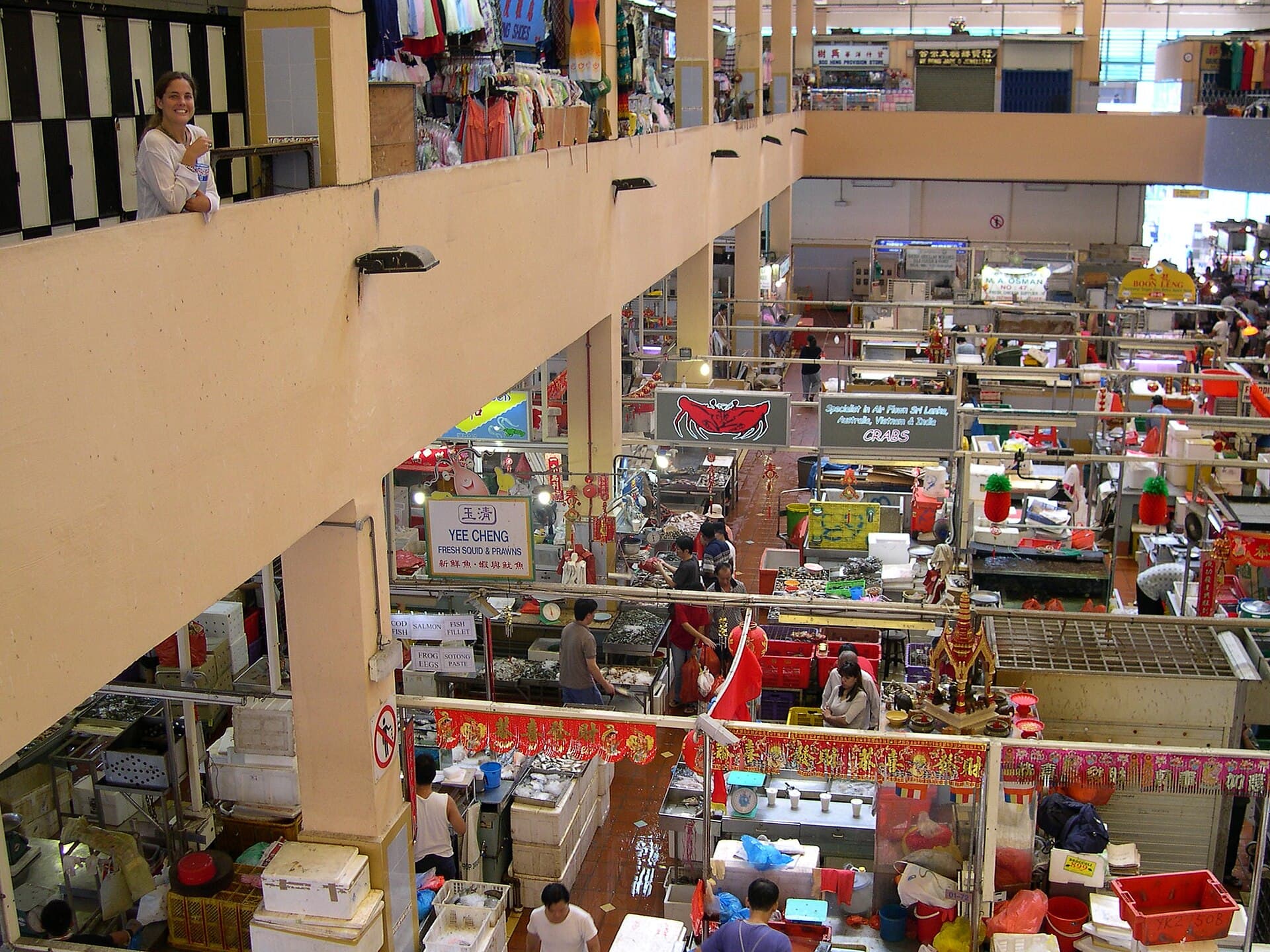
A wet market before 8am is one of the few remaining rooms in Singapore that still feels like a town. The ice is loud. The floor is honestly wet. People buy two days of vegetables and an argument's worth of fish, then go upstairs for kopi. If you only know markets as a weekend lifestyle activity, this hour will correct you.
Tekka, Tiong Bahru and Geylang Serai are not interchangeable. They share a building type — produce and protein downstairs or on the wet floor, cooked food above or beside — and they serve different kitchens. Go early enough and you can use all three without turning the morning into a heritage trail.
Why the hour matters more than the tote bag
Hawkers and home cooks who still use these buildings do not browse. They arrive when the fish has just come off the lorry and the kangkong has not wilted under the lights. By 9.30am the market is still open, still useful, and already a second-best version of itself. The good ikan kuning is gone. The remaining kailan is the bunch with the yellowing leaf turned inward. The butcher is in a longer conversation with the regular who got there at 7.
Shoes you can wash are not a style note. The tiles are rinsed constantly. At Tekka especially, you will step through water that has been in contact with fish ice. That is the point of a wet market. If you wanted dry grocer aisles, Sheng Siong is still there after work.
Bring small notes and a couple of bags that can take a leak. Some stalls take PayNow. Many prefer cash because their hands are wet and the QR is behind the scale. Prices are called by the catty or by the bunch; if you do not know the number, ask for "one bunch" or "three pieces" rather than inventing a weight. A morning's vegetables for a household is often $8 to $15 if you are not buying imported berries. Fish is the line item that jumps.
The market is not a museum of old Singapore. It is a shop that happens to open before your first meeting.
Closed days follow the same logic as hawker stalls. Some markets thin out on Monday. Individual stallholders take their own weekday off. If you are travelling across town for a specific butcher, have a second option in the same building.
Tekka: spices, fish and breakfast upstairs
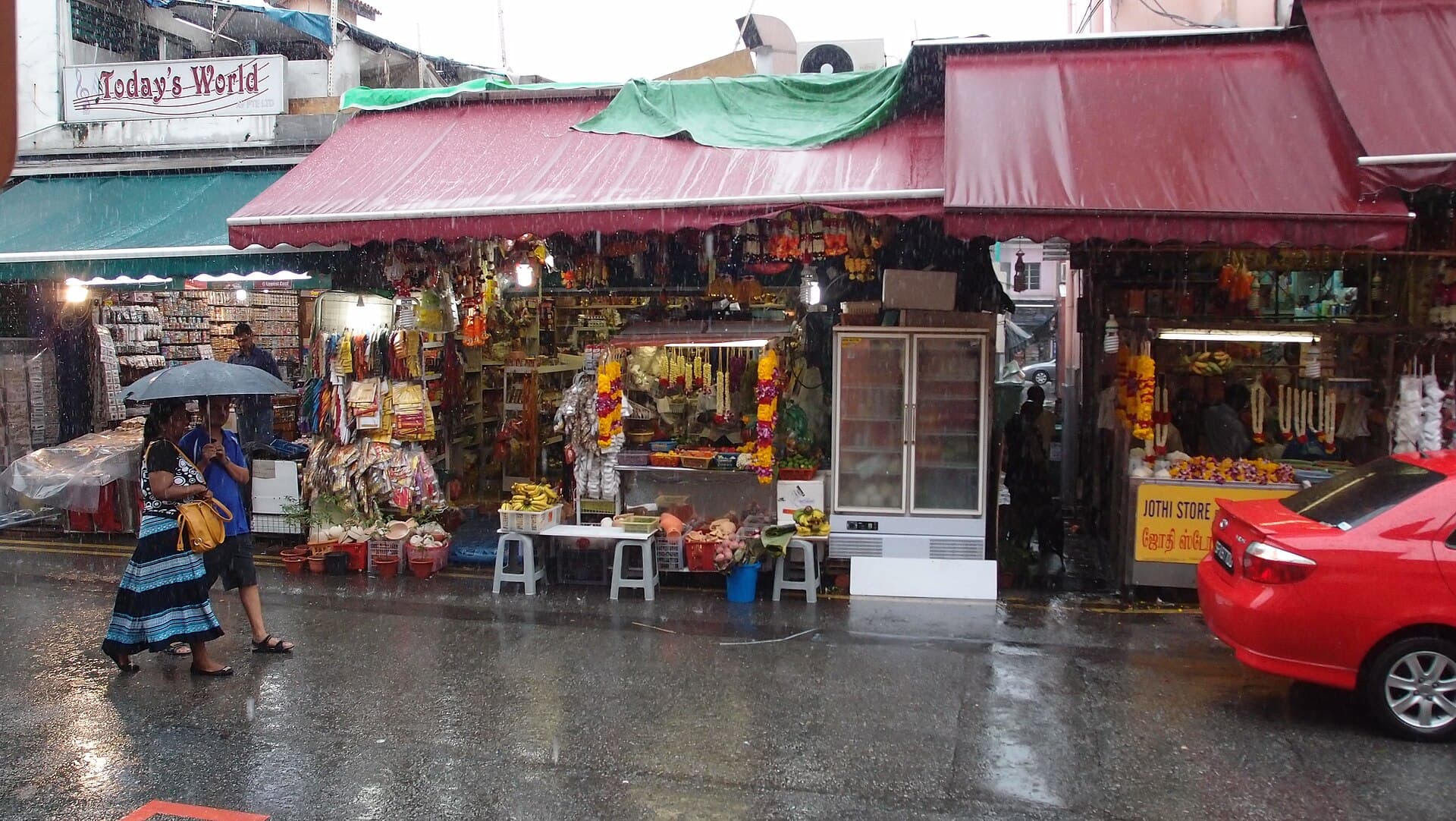
Tekka Centre sits on the edge of Little India, a short walk from Little India station on the North East and Downtown lines, or from Rochor. The wet market is the ground-floor reason to come. Fish, goat, chicken, piles of okra and brinjal, herbs that still look like herbs. The spice and sundries stalls are why people who cook Indian, Malay and Peranakan food will cross the island: dried chilli, tamarind, fresh curry leaves, the packet of something your mother asked for by colour.
Upstairs is cooked food. This is where the morning becomes a meal rather than a chore. You can eat Indian vegetarian, Muslim breakfast, and the sort of kopi that still comes in a saucer. If the vocabulary is the part you came for, order it the way the drinks uncle expects and sit with the bags under the table, not on the next chair.
The neighbourhood around the building is doing its own morning. Serangoon Road before 9am is deliveries, temple traffic and people buying garlands, not the Saturday evening crowd. If you want that wider picture, walk it as Little India on a weekday morning after you have finished with the fish. Do not reverse the order unless you enjoy carrying prawns through a temple courtyard.
Tiong Bahru: the market people treat as a personality
Tiong Bahru Market and Food Centre is the one that got famous for being photogenic, which has not stopped it from being a working market. The wet floor still sells fish, pork, poultry and vegetables to people who live in the walk-up blocks and the newer condos. The cooked-food floor is the reason visitors appear at 10am and look surprised that the market started without them.
Go at 7am and you get the actual rhythm. Regulars at the butchers. Aunties comparing bunches of chye sim. A queue at the breakfast stalls that is local before it is social-media local. Buy produce first if the stall you want is already busy; eat after, when the bag can sit. Pork is everywhere on this floor, which matters if you are shopping for a no-pork kitchen. You can still fill a bag with vegetables, eggs, tofu and fish. You have to look past the roast trays.
The surrounding estate is the other half of the morning. After you shop, walk Tiong Bahru as a neighbourhood rather than treating the market as an isolated attraction. The old blocks, the bird corner if you catch it, the quieter paths away from the food-centre entrance: that is the reward for getting up. By 11am the same streets are a different density.
Geylang Serai on an ordinary Tuesday
Geylang Serai Market is the one people from other parts of the island visit in Ramadan and then forget. That is a missed market. On a normal weekday morning the building is a Malay and Singaporean-Muslim grocery run: pandan, bunga siam, spices, beef and chicken, vegetables for masak lemak, snacks from the cooked-food side. You go because you are cooking that food, or because you want breakfast that is not another plate of eggs.
Ramadan changes the clock and the temperature of the place. Evenings become a bazaar — crowded, festive, useful if you want seasonal snacks, exhausting if you wanted to buy fish in peace. Prices and queues follow the season. If your only visit is a Ramadan night, you have not met the market. You have met the festival that uses its carpark.
An ordinary Tuesday at 7.30am is the corrective. The wet floor is open. The cooked-food stalls are feeding people on the way to work. You can buy what you came for and leave without a story. That is the compliment.
Geylang the supper strip, a few roads away, is not this building. Do not plan a 7am market trip and a 1am zi char as if they were the same outing. They share a name and almost no manners.
How to shop without performing old-Singapore
List first. Markets punish improvisation only when you are hungry and overstimulated; a four-item list keeps you from buying three types of leafy vegetable that will die on Thursday. Talk to the stallholder in the units they use. If you want fish for steaming, say steaming. They will pick a fresher piece than the one you pointed at because it looked photogenic.
Do not bargain as theatre. A small stall may round down if you buy several things. They will not perform a wet-market haggle for your benefit. Do not touch every mango. Do not take photographs of the butcher's hands. Do not block the aisle with a conversation about how charming the ice looks.
Pay, pack the wet things separately, wash your hands before you eat upstairs. If you came by MRT, the journey home is the part people forget: fish in a packed East-West Line carriage at 8.40am is a civic problem you can avoid with an extra bag or a slightly later train.
Use one market until you know three stallholders. Then use a second for the thing the first does less well — spices at Tekka, a favourite vegetable stall at Tiong Bahru, beef at Geylang Serai. The point of going before 8am is not to collect buildings. It is to get dinner ingredients while the ice is still doing its job, then drink a cup of kopi before the rest of the city has decided what to eat.