Instagram still sells Tiong Bahru as a pastel village with sourdough. Residents know a different grid: low Singapore Improvement Trust blocks from the 1930s and 1950s, a wet market that still opens on poultry and cuttlefish, and a bird-singing corner that has outlasted several waves of “discovery”. The walk that still feels like a neighbourhood is not a treasure hunt for murals. It is a loop you can do before lunch, on foot, without treating the void decks as a backdrop.
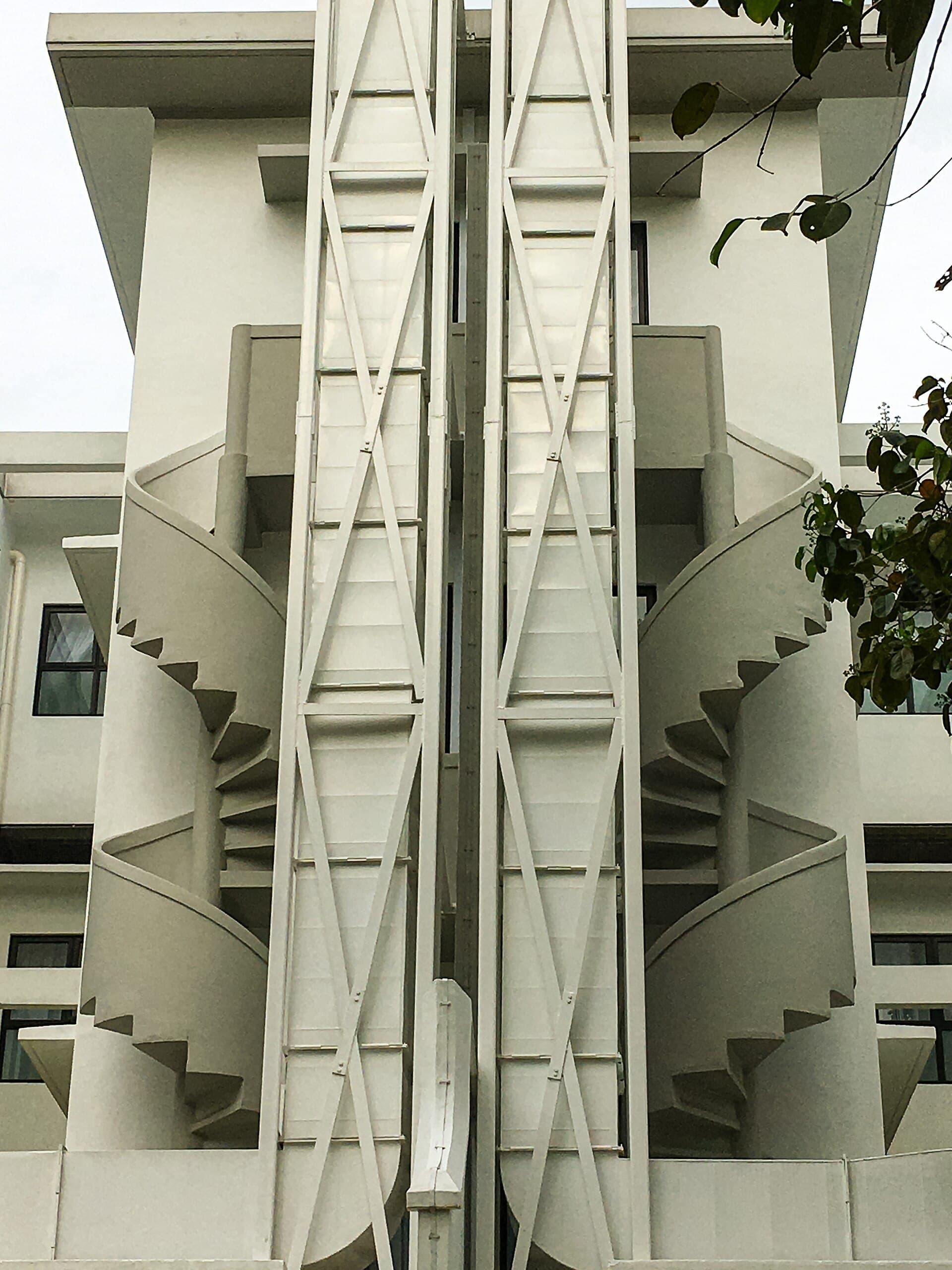
Start with the scale. These are not HDB point blocks. The SIT flats along Guan Chuan Street, Moh Guan Terrace and Tiong Poh Road sit at three or four storeys, with horseshoe courtyards, spiral staircases and balconies meant for laundry, not a café. You can hear a conversation from the opposite walkway. That density is why the estate photographs well, and why a Saturday brunch crowd changes the sound of the place.
The point of Tiong Bahru is not that it is quaint. It is that the streets were laid out for people who already lived here.
Start at Seng Poh Road, not Yong Siak Street
If you only have a morning, begin at Tiong Bahru Market and Food Centre at 30 Seng Poh Road. Downstairs is still a working wet market in the same family as Tekka and Geylang: fish on ice, stacks of chye sim, the uncle who will trim your pork with a look that says you should have been more specific. Upstairs is the hawker floor, which rewards the same habits you would use in any heartland centre — tray return, no hovering over a half-eaten table, and a little patience when the auntie is taking four orders at once.
Come on a weekday if you can. By 8am the market is for households: tau kwa, a chicken for soup, fruit that will not last the week. By 11am on a Saturday the aisles are still shopping, but the pavement outside is a holding pen for pastry queues. Decide which junction you came for.
Seng Poh Garden, the small hard-court pocket next to the market, is where the bird-singing corner gathers. Men arrive with wooden cages wrapped in cloth, hang them on the frames, and sit as if they have all morning, which they often do. The sound is not decorative. It is competitive and companionable at once. If you stop, stand outside the ring. Do not film a close-up of someone else’s bird without asking. The corner has survived because it is still a club, not a show.
From the market, walk Seng Poh Road toward the old blocks rather than toward Tiong Bahru Road. You want the inward streets: Chay Yan Street, Guan Chuan, then Moh Guan Terrace. The five-foot ways are shallow and uneven; the original tiles, where they remain, beat another photograph of a spiral stair.
Bookshops, bakeries and the queue problem
Yong Siak Street is the street the guidebooks found. It has the cafés, the design shops, and the memory of bookshops that have already moved on. BooksActually left years ago; the idea that Tiong Bahru is a “book village” is now mostly a residual feeling and a handful of shelves in other rooms. That is fine. What is less fine is treating the remaining independent shops as if they owe you a browsing soundtrack. Buy something, or keep walking. The staff are not extras.
Tiong Bahru Bakery on Eng Hoon Street and the coffee places on Yong Siak will have a queue on any late morning that is not a public holiday. If you live here, you already know whether that croissant is worth twenty-five minutes of standing. If you do not, consider that the same money buys a kopi and kaya toast two streets over, or a plate upstairs at the market for under S$6. The bakery is competent. The queue is a social fact, not a recommendation.
The tension is not “old versus new”. The estate has always taken in newcomers. The tension is between streets used as a neighbourhood and streets used as a set: 7.30am on a Tuesday, a trolley of vegetables on the slope, versus 11am on a Sunday and a couple posing in the middle of Moh Guan Terrace.
Walk the back lanes as well as the pretty frontages. Between the horseshoe blocks there are drying yards, bicycle parking and the odd shrine. Keep to the public paths; do not climb staircases that serve flats.
Tiong Bahru MRT versus walking from Outram Park
Tiong Bahru MRT (EW17, East–West Line) is a useful station for the newer, taller Tiong Bahru: Zhongshan Park, the mall, the blocks that went up when HDB took over the story. It is a longer, hotter walk to the SIT precinct than the map suggests, because Tiong Bahru Road is a proper road, not a lane, and the pedestrian crossings are not always where you want them. Exit A is the usual start. Budget fifteen minutes to the market, more if you stop in the shade.
Outram Park (EW16 / NE3 / TE17) is often the better arrival if your destination is Seng Poh Road. Come up toward Outram Road and Hospital Drive, then walk the slight downhill into the estate. You pass the edge of the Singapore General Hospital campus, then the first low blocks appear and the traffic noise drops a register. It is a ten- to fifteen-minute walk, mostly on pavement that residents actually use to get home. If you are already on the Thomson–East Coast Line, this interchange saves you a transfer and a stretch of Tiong Bahru Road.
Buses along Tiong Bahru Road and Kampong Bahru Road will drop you closer than the MRT if you are coming from the south. Check the stop for the market rather than the station. There is no need to Grab a kilometre that was designed for walking.
A loop that still belongs to the people who live here
After the market and the SIT blocks, cut through to Tiong Bahru Park rather than doubling back to the cafés. The park is not dramatic. It has a lawn, a playground, and enough mature trees to make a late-morning sit possible. On weekday evenings you will see domestic helpers on the benches, children on the equipment, and older residents doing the slow lap they have done for decades. That is the neighbourhood the walk is supposed to protect in your head: ordinary, repeated, not curated.
If you want a second food stop, stay with the kopitiams and the market floor. The menus are written for people who will be back on Thursday. Order the way you would in Queenstown or Toa Payoh. Point, say the price you expect if you know it, and move aside to wait. A plate of lor mee or a bowl of chwee kueh will tell you more about this postcode than another flat white.
The estate is small enough that you will cross the same junction twice. Use the second pass. Notice which shops have changed hands — provision shops thinning out, a new wine room, a clinic older than the bakery. Conservation kept the height down. It did not freeze the tenants.
From the park you can walk on toward Redhill or turn back to Outram. If you have the afternoon and want a contrast, Queenstown is the honest next neighbourhood: first new town rather than pre-war showcase, Margaret Drive instead of Seng Poh, and a weekend that looks like the rest of Singapore rather than a film still. The two places are a short bus ride apart and a long conceptual distance.
Wear shoes that can take a wet-market floor. Bring a tote if you intend to shop. Carry a bottle; there is shade in the courtyards, less of it on Tiong Bahru Road. If it rains, the five-foot ways of the SIT blocks are the original covered walkway — incomplete, still better than standing at the crossing.
Do not treat the bird corner as a last stop for content. If you missed it, you missed it. Come back on a Wednesday. Buy fish. Learn which staircase is which. That is when Tiong Bahru stops being a backdrop and starts being a walk you could do without writing it down.