A heartland weekend is not a consolation prize for missing the civic district. For most people who live in Singapore, it is the default Saturday: a hawker centre, a library, a park that is not a brand, and a town centre that sells household goods rather than souvenirs. Queenstown is the place to make that case, because it was the first. Before Toa Payoh and Ang Mo Kio became the template, this fold of land between the ridge and the river was where the Housing and Development Board proved that a new town could hold a life.
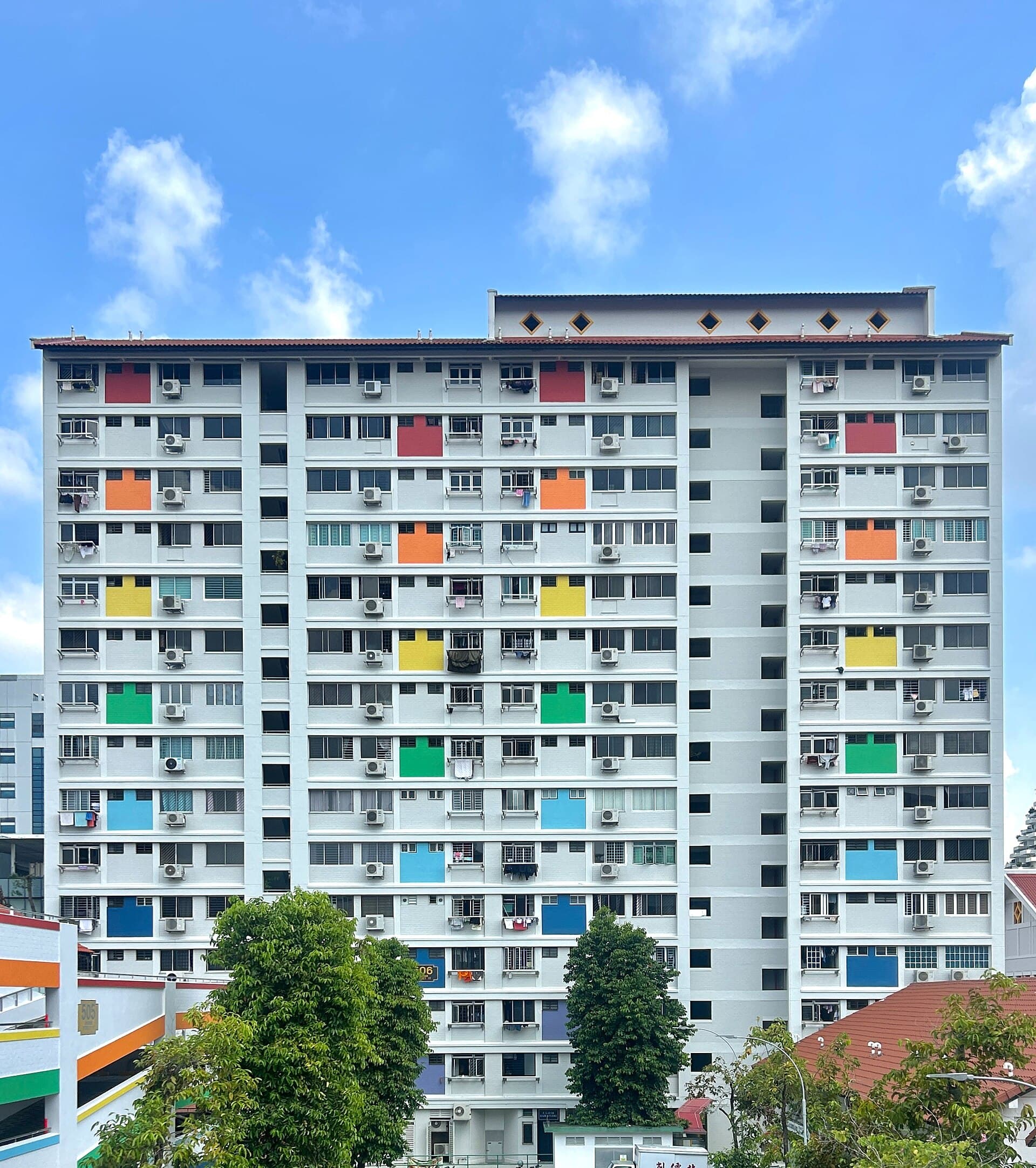
The Instagram version of Singapore skips Queenstown unless someone has found a rainbow block or a demolished corridor to mourn. Residents skip the performance and go to Margaret Drive, Commonwealth Crescent, or the town centre under the blocks along Commonwealth Avenue. The walk is not pretty in the Tiong Bahru sense. It is readable. You can see how a new town was meant to work: school, market, clinic, bus, flat, park, repeat.
Queenstown’s achievement was never charm. It was the idea that an ordinary weekend could happen without going into town.
First new town, still a working one
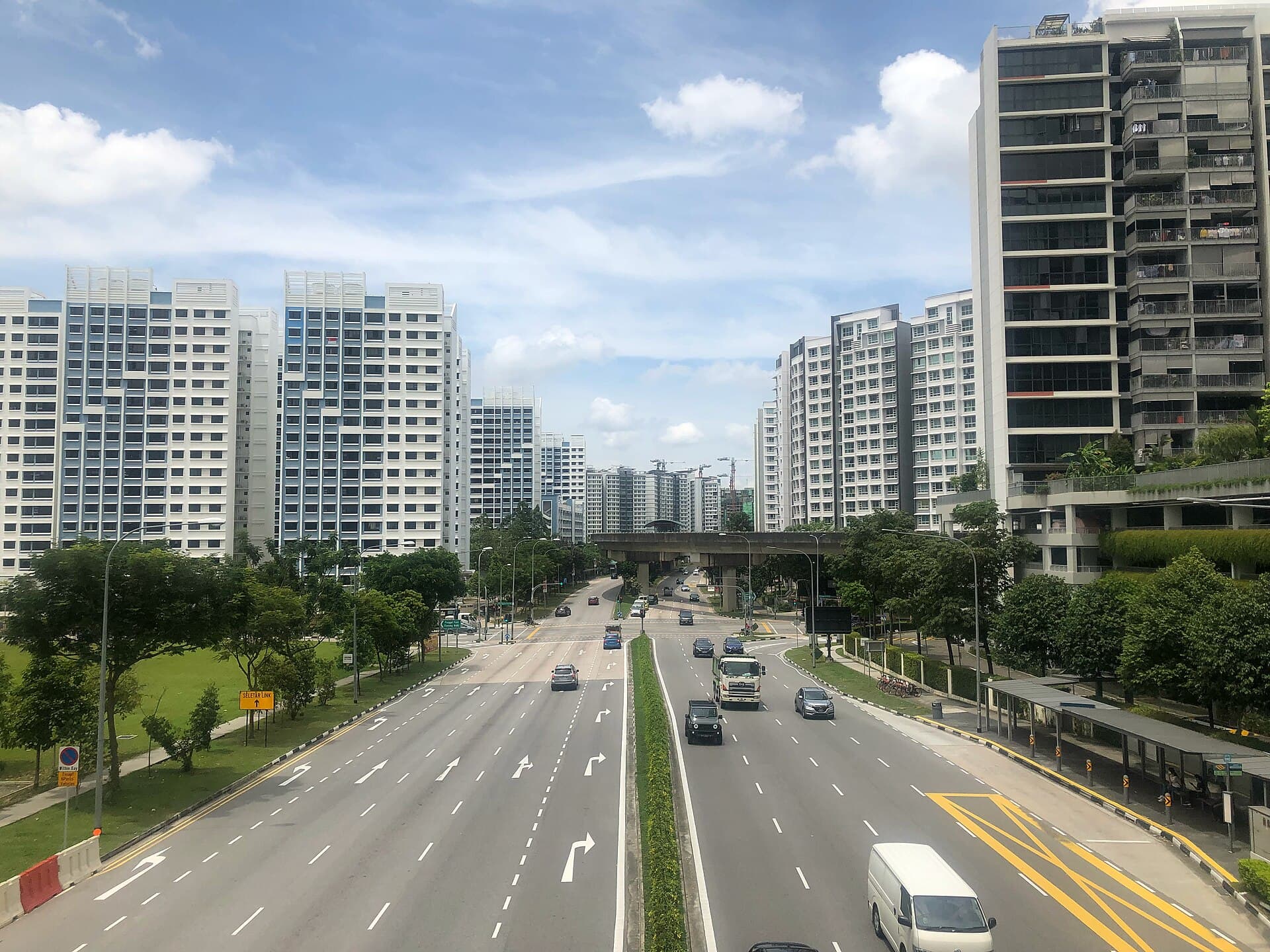
Queenstown was planned in the 1950s as a satellite town for a city that was running out of shophouse room. The early estates — Princess, Duchess, Tanglin Halt, Commonwealth — still name the streets and the memory, even where the original blocks have been replaced. Stirling Road, Margaret Drive and Commonwealth Avenue are the spine. The point blocks and slab blocks that followed the first walk-ups are the skyline you actually see.
If you arrive expecting a heritage trail with plaques at every staircase, you will be disappointed. If you arrive expecting to understand a Saturday when people are not hosting relatives at Marina Bay, you will be served. The town centre still has the old logic: shops under the flats, a bus-interchange feeling even where the interchange has moved, and a public library that used to be the branch people meant when they said they had a library at all.
Queenstown Public Library on Margaret Drive is worth an hour that is not ironic. It is air-conditioned, used, and full of students who live upstairs. A heartland weekend that does not include a library is just a food trip. Sit, read the notices, look at who is there. This is one of the free habits that still structure a resident’s week, and it is more revealing than another waterfront.
The parks here are neighbourhood parks: Queenstown Park, the greenery around Dawson, the strips along the canal. They are for walking the dog, for the evening tai chi group, for children who do not need a destination. Bring water. There is shade, then there is a stretch with none, which is the usual Singapore contract.
Margaret Drive and the hawker habit
Margaret Drive Hawker Centre is the current food floor for this side of the town, a modern replacement after the old centre came down. It is bright, organised, and still a hawker centre: you queue, you carry your own tray, you find a seat, you eat. The etiquette is the national one, not a special Queenstown code. Chope with a packet of tissue if you must, but do not colonise a six-seater for two when the lunch crowd is standing.
A weekday lunch here looks like the surrounding offices and the nearby flats. A weekend late breakfast looks like families and the after-exercise set. Prices sit in the ordinary band — most plates still live between S$4 and S$7 if you are not collecting sides. You do not need a famous stall. You need a queue that is moving and a dish you recognise. If you want a kopitiam breakfast instead, the older coffee shops around Commonwealth Crescent and the town centre will do kaya toast and a soft-boiled egg without a numbering system.
Commonwealth Crescent Market is the other pole: wet market downstairs on the mornings it is in full swing, cooked food, the kind of errand run that is the actual heartland weekend. Come before 10am if you want vegetables that have not been picked over. Combine it with the hawker centre only if you have a tote and a plan for the frozen things. This is a neighbourhood loop, not a tasting menu.
Drink kopi if you want to sit longer. The uncles will not mind if you stay through one refill of conversation, which is not the same as camping a table through the lunch peak with a laptop. Heartland centres still run on turnover. Help them.
Tanglin Halt, memory and what replaced it
Tanglin Halt is the name that comes up when people talk about Queenstown and loss. The low blocks, the provision shops, the sense of a village inside a new town — much of that fabric has been cleared under selective en-bloc and redevelopment. Residents were moved, some nearby, some further. New towers went up. The name remains on signs and in conversation, which is how Singapore keeps a place after it has changed the buildings.
You can still walk the streets and feel the gap. Do not turn a demolition into content. Look at what was built after and ask whether the new town is still doing the job: can a child walk to school, can an elderly person reach a clinic, is there a table for dinner downstairs.
Dawson and the newer clusters along Margaret Drive are the current answer — taller, more facilities, playgrounds specified as a package. They are not a tragedy. They are also not the same as the walk-up corridors people miss. An honest weekend holds both facts. Singapore’s first new town is now on its second or third generation of housing.
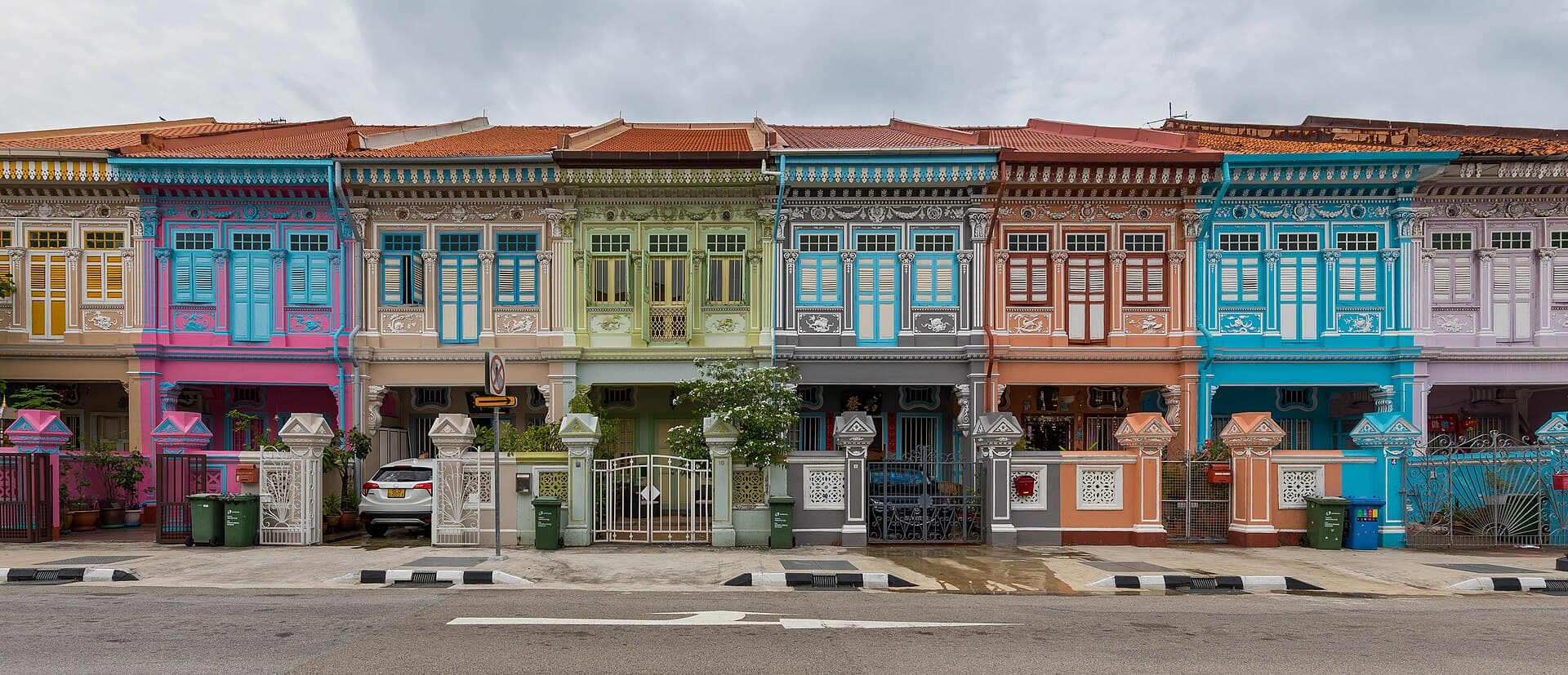
If you want a more intact pre-war scale, that is Tiong Bahru’s walk, one or two bus stops east and a different planning era. Queenstown’s lesson is the opposite: planned modernity, then the long work of replacing it without pretending the first version is still standing.
Commonwealth or Queenstown, and the hours that matter
Commonwealth MRT (EW20) drops you nearer Margaret Drive, the hawker centre and the Dawson-side parks. Exit and walk along Commonwealth Avenue, then down Margaret Drive. It is a straightforward, slightly exposed walk; the afternoon sun is not theoretical. Queenstown MRT (EW19) is better for the town centre, the library approach, and the older grid toward Stirling Road. Both are East–West Line stations. There is no need to overthink a transfer.
Buses along Commonwealth Avenue and Queensway will put you closer to a specific block than the MRT will. If you are coming from the north, the Circle Line at Buona Vista or Holland Village and a short bus ride can be kinder than riding all the way into the East–West trunk.
Saturdays from 8am to noon are the useful window: market, kopi, library, a park bench, home before the island’s mid-afternoon heat. Sundays are similar but heavier on families. Public holidays change the opening hours more than they change the mood — some stalls shut, the library may run holiday hours, the park fills earlier. Check before you build a day around a single stall.
Evenings in Queenstown are estate evenings. People come downstairs for dinner, not for a scene. If you want late-night eating you will do better closer to the city or the east. That is not a failing. It is the point of a heartland weekend: you are done when the children are done, and the last train is a convenience rather than a deadline.
Wear walking shoes. The distances between station, market, library and park are short on a map and long enough in humidity to punish sandals that slip.
Queenstown will not give you a row of shophouse tiles or a mosque dome at the end of a street. It will give you the pattern that most of the island actually lives in. If you can spend a Saturday here without feeling that you have missed Singapore, you have understood the city better than another loop of the Bay. That is the case for a heartland weekend, and this is still the town that made it possible.