Breakfast in Singapore is a dialect. You do not ask for "coffee, less sugar, no milk". You ask for kopi-o siew dai and the drinks uncle writes it on a pad without looking up. Get the words wrong and you still get a cup. Get them right and the cup matches the one your parents have been drinking since before the kopitiam installed a card reader.
This is not nostalgia for its own sake. The lexicon is still the fastest way to order in a room that serves two hundred cups before 9am. It also tells you which rooms are still in the business of breakfast, and which have become places that sell toast as a weekend activity.
The words, in the order you actually use them
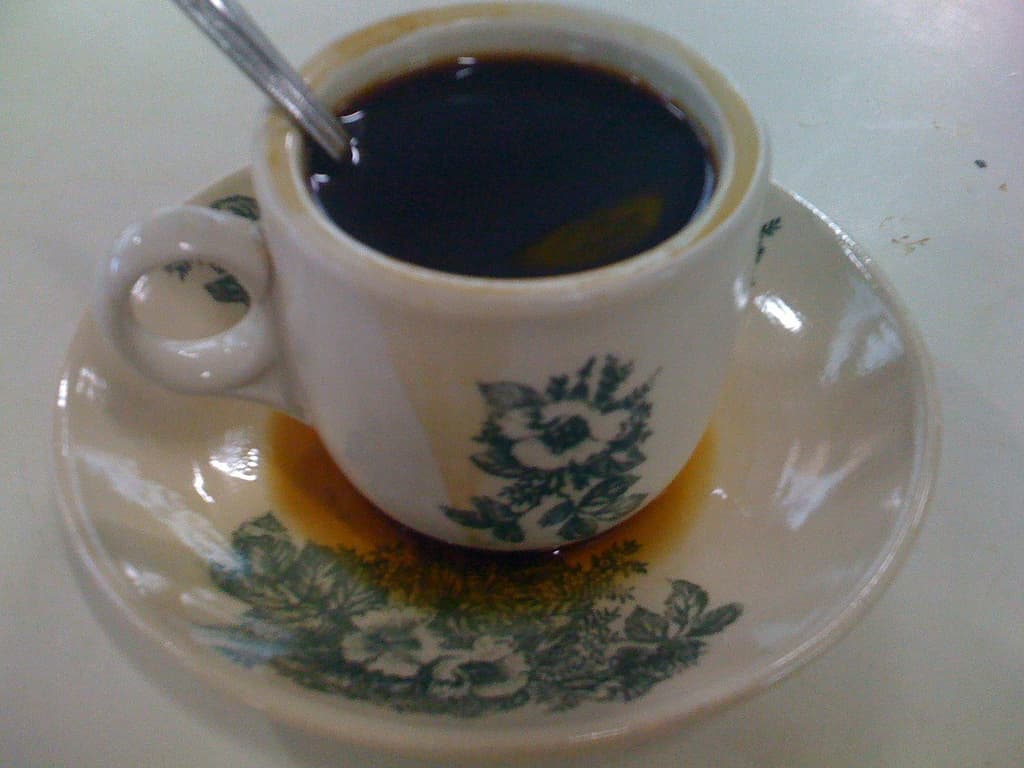
Kopi is the base: robusta-leaning beans roasted with sugar and margarine, brewed through a sock, then cut with sweetened condensed milk. It is sweet. It is heavy. It is the default when you say nothing else.
Kopi-o drops the milk and keeps the sugar. Kopi-c swaps condensed milk for evaporated milk, so the cup is lighter in colour and less sticky-sweet. Peng means iced, which in practice is a plastic bag or a tall glass with too much ice and a rubber band. Siew dai is less sugar. Ga dai is more. Kosong is no sugar, and if you say kopi-o kosong you have ordered bitter black coffee with nothing to hide behind. Po is a weaker pour, more water, the cup for people who want a second one. Yuan yang is coffee and tea in the same cup, a mixture that sounds like a dare and is in fact a standard breakfast order.
Teh follows the same grammar. Teh, teh-o, teh-c, teh peng, teh tarik. Tarik is the pulled tea, poured between mugs to froth, more common in Indian-Muslim coffee shops than at a Chinese hawker drinks stall. If you want teh tarik, go where they are already pulling it, not where the drinks uncle is holding a sock over a kopi tin.
Say the words in a stack: drink, milk, sugar, ice. "Kopi-c peng siew dai" is one order. "Can I have an iced coffee with evaporated milk and less sugar" is a paragraph. The stall does not need the paragraph.
Kosong is not a personality. It is just a cup with no sugar, and you can still add it later from the jar if you lose your nerve.
Prices are still the part of breakfast that feels like 2014. A cup is often $1.20 to $1.80 at an estate coffee shop, a little more in a renovated kopitiam that has discovered interior design. Pay cash if the QR is half peeled off. The same payment habits as a hawker centre apply: small notes, no speech about cards.
Toast, eggs and the plate that is the point
The drink is half the breakfast. The other half is grilled white bread, cold butter, kaya, and two eggs so soft the white has only just set. You break the eggs into a saucer, add dark soy and white pepper, then dip the toast until the crust gives up. Some stalls still serve the bread as a thick slab. Some have gone thin and crisp. Both are acceptable. What is not acceptable is treating the eggs as optional decoration. They are the protein. They are why you can skip lunch until 1pm.
Kaya flavour splits households the same way chicken rice does. Some want the pandan-green spread, eggy and sweet. Some want a brown caramel version. You do not need a theory. You need to know which one the stall is using that morning, because they will not offer a tasting flight.
A proper breakfast plate in 2026 is usually $3.50 to $6, drink extra. If the toast arrives with avocado, you have left the lexicon and entered a different meal. That meal can be fine. It is not what this article is for.
Kopitiam versus hawker drinks stall
A kopitiam, in the old sense, is a coffee shop with a drinks counter at the centre and cooked-food stalls around it. Breakfast is the main event until about 10.30am. You sit, the uncle comes to you or you go to the counter, and the toast stall is five steps away. These rooms still exist in estates, at some wet-market buildings, and in a few conserved shophouses that have not fully become cafés.
A hawker drinks stall is the same vocabulary without the toast theatre. You order kopi after your chicken rice or economic rice. The cup arrives at the table. Nobody brings you eggs unless you have also queued at a nearby breakfast stall. Both are correct uses of the words. Mixing them up is how people stand at a drinks stall at Maxwell asking for kaya toast and looking betrayed.
Weekday breakfast is faster. People are on the way to the office, the school gate, or the market. They order the same cup they ordered on Monday. Weekend breakfast is slower and more likely to include a second plate: extra toast, a side of otah, a bowl of bee hoon from the neighbouring stall. The lexicon does not change. The patience of the queue does.
If you are already up early, combine this with a wet market before 8am. Tekka and Tiong Bahru both have cooked-food floors that understand kopi-o peng at 7.15am. That combination — market bag, hot drink, soft eggs — is a more accurate picture of a Singapore morning than a café queue on a Saturday.
How to order so the uncle does not have to translate
Stand at the counter. Or sit and wait if the stall is the circulating kind. Say the drink in one breath. If you want toast, say how many sets and whether the eggs should be more cooked. "Two sets, eggs soft, one kopi, one kopi-o siew dai" is a family order. "We'll have a look at the menu" is how you lose your place in the invisible queue.
Do not ask whether the beans are single origin. They are not. Do not ask for oat milk unless the board already offers it; some newer kopitiams do, most hawker drinks stalls do not, and the sock is not waiting for your alternative. If you need less sweet, siew dai is the tool. If you need no sugar, kosong is the tool. If you need the cup to taste like a flat white, you are in the wrong building.
Takeaway is still a plastic bag with a straw and a rubber band, or a cup with a lid if the stall has modernised. Say "tabao" or "takeaway" and hold the bag from the top, not by the straw. Iced peng in a bag will sweat through your office trousers. This is not a design flaw. It is a warning.
Where the habit still holds
You will find the full breakfast — lexicon plus toast plus eggs — more reliably in neighbourhood coffee shops than in the downtown hawker centres that tourists treat as lunch theatres. That is not a slight on Maxwell. It is a statement about the clock. Chicken rice at noon and kaya toast at 8am are different businesses that happen to share a drinks vocabulary.
If you live near an old coffee shop, use it on a weekday. Order the same cup three times. The fourth time, the uncle may not ask. That is the whole reward. The lexicon exists so that breakfast can be boring in the best way: fast, cheap, sweet enough, and over before the first email.
Bring cash. Bring the words. Leave the tasting notes for the café that already printed them on the board.