Haji Lane is a short, painted lane that photographs as if it were the whole of Kampong Glam. It is not. The neighbourhood is older than the murals, larger than the boutiques, and still organised around Sultan Mosque, the textile shops on Arab Street, and the eating houses on Kandahar Street that feed people who are not on a pub crawl. If you live in Singapore and only know this precinct from a Saturday night, a weekday late morning will correct you.
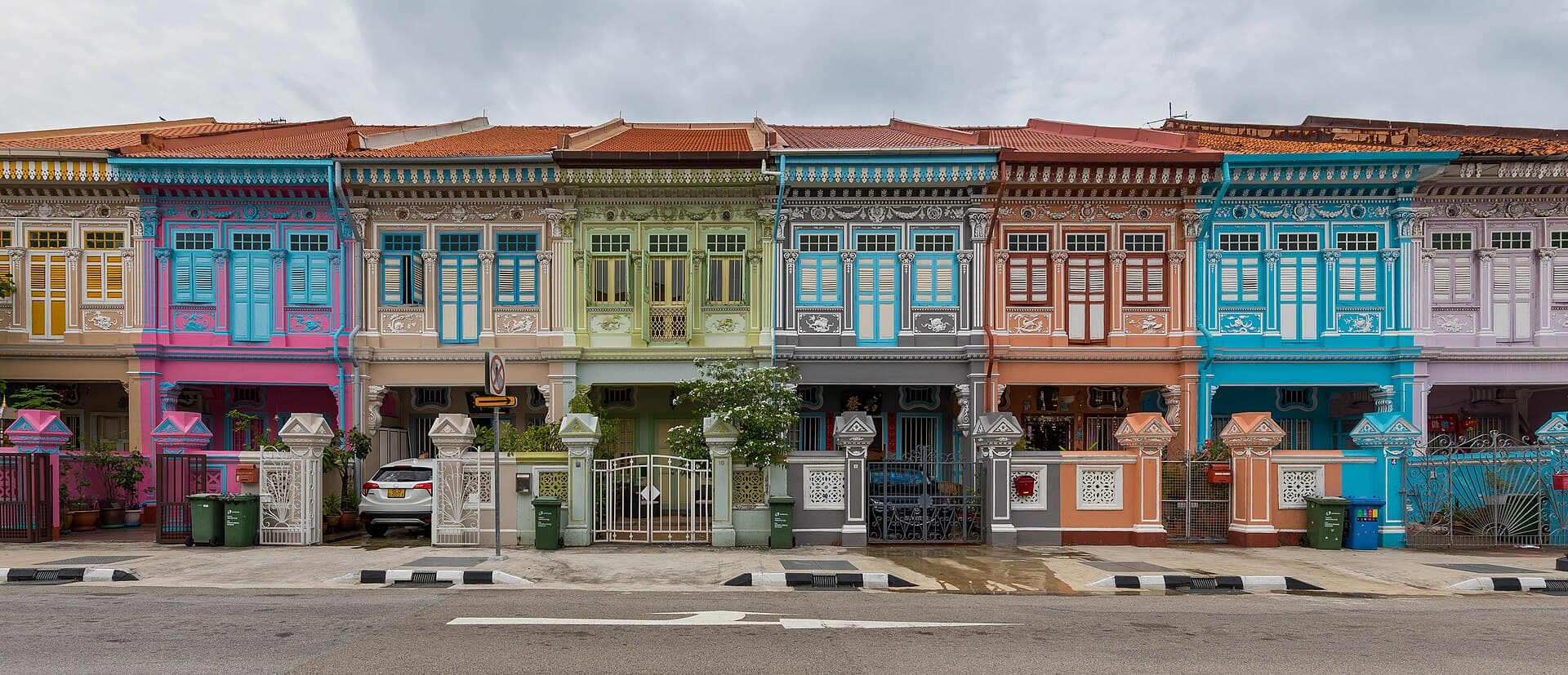
Kampong Glam was a royal compound before it was a nightlife postcode. The mosque, the former istana that is now the Malay Heritage Centre, and the shophouse grid between North Bridge Road and Beach Road still explain the streets better than any wall of stickers. You can walk the whole thing in forty minutes. You should take longer: the useful information is in the shops that have not changed their signage.
Bussorah Street is a view of the mosque. The neighbourhood is what happens when the call to prayer cuts through the café speakers.
The mosque is the centre, not the backdrop
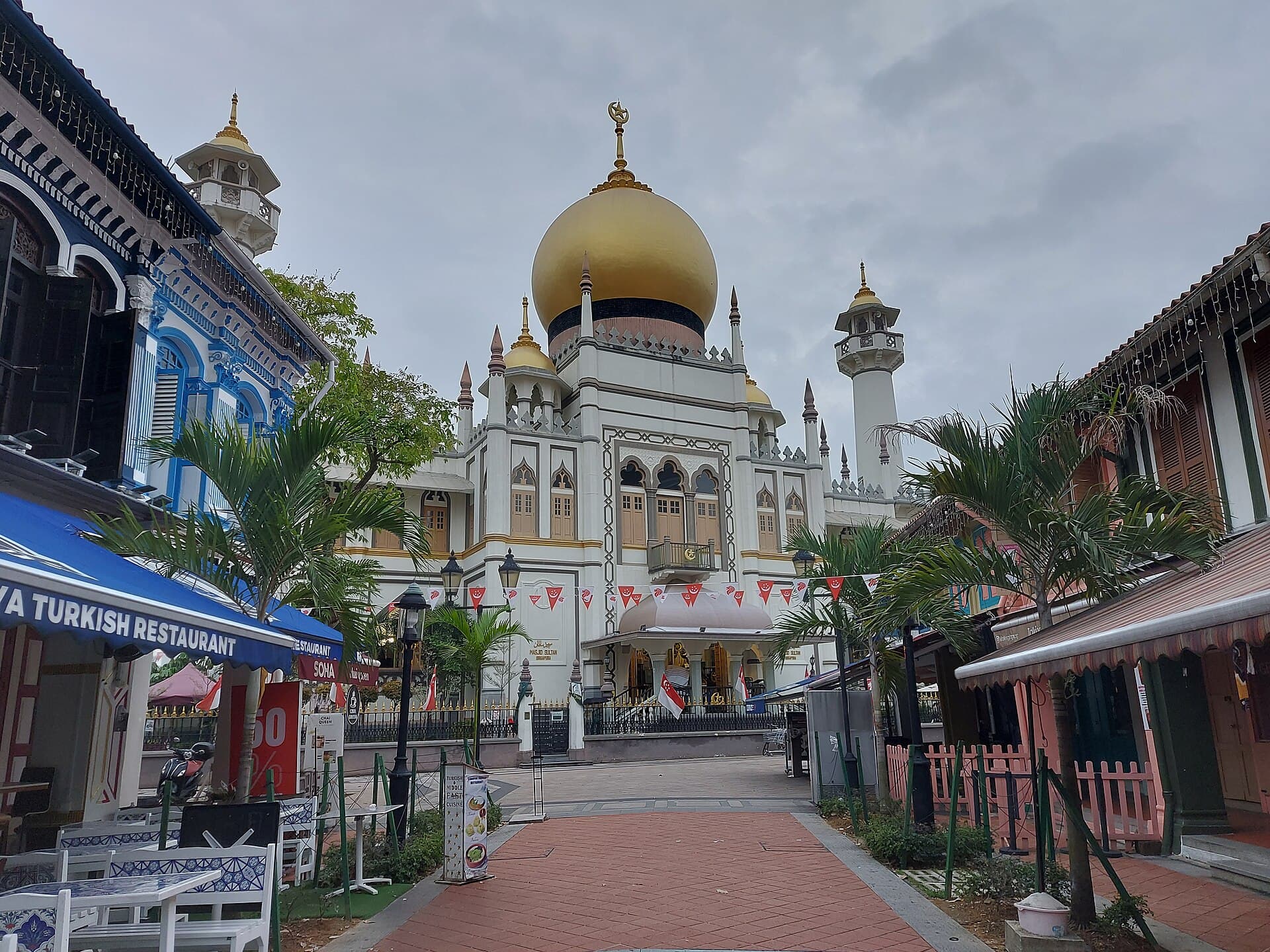
Masjid Sultan sits at the end of Bussorah Street with a gold dome that every visitor already has on their phone. That does not make the building a sculpture. It is a working mosque for a congregation that lives in the surrounding blocks and comes in from elsewhere in the east and north. Prayer times are not a special event. They are the clock.
If you walk Bussorah, keep to the sides when people are arriving for prayers. Do not stand in the centre of the street for a symmetrical shot while worshippers try to pass. Shoulders and knees covered is the minimum if you intend to go in; the mosque provides robes when it is open to visitors. Shoes off, voice down, no photography where it is barred.
The Malay Heritage Centre, in the old Istana Kampong Gelam on Sultan Gate, is the other civic building that still holds the story. It is not a long visit. It is a useful one if you have been treating the precinct as a collection of cocktail bars with a dome attached. The compound is quieter than Bussorah, and the grass is for sitting, not for a picnic spread that blocks the path.
Around the mosque, Muscat Street and Baghdad Street still have shops that sell songkok, prayer rugs and perfume oils to people who will use them. Those counters are not “authentic décor”. They are retail. If you go in, know what you are buying or ask a real question.
Arab Street, Kandahar and the streets that still work
Arab Street is the textile street. Rolls of batik, songket and plain cotton sit in the deep shophouses, and the uncles who run them have watched the lane behind them turn into something else. You can still buy fabric by the metre. You can still commission a set of curtains. Prices are in the tens and hundreds of dollars, not in the souvenir-magnet range, and bargaining is possible without being theatrical. This is closer to the original commercial reason for the street than another tote bag with a silhouette of the mosque.
Kandahar Street is where you eat if you came for food rather than for a queue that started on social media. The nasi padang shops and Malay-Indonesian houses along here and on North Bridge Road serve rice, lauk, and the kind of lunch that office workers from Bugis still walk over for. Order at the display, point to three or four dishes, and take the tray. A plate in the S$7 to S$12 range is normal. The air-conditioned places on Bussorah will charge more for a view of the dome; that is a different product.
Haji Lane and Bali Lane sit behind Arab Street like a parallel economy. In daylight they are small-label shops, tattoo studios and cafés. After dark they are bars, speakers on the five-foot way, and a crowd that arrived from elsewhere in the city. Both versions are real. Only one of them is the picture that gets exported. Decide whether you came for cloth and rice or for a drink in a painted alley. You can do both. You should not pretend they are the same walk.
Walk Beach Road and North Bridge as well. This edge of the city has been a transit strip for a long time — pilgrims, traders, now tourists rolling suitcases toward Bugis. Kampong Glam was never a sealed village. It was a port neighbourhood with a palace in it.
Residents, nightlife and the hours that clash
People still live in the shophouses and the blocks behind the tourist streets. Laundry appears on bamboo poles. Children come back from school along streets that, by 10pm, are a different soundscape. The conflict is not mysterious: short-term visitors want the lane to stay open; residents want to sleep; the mosque wants a path that is not a party. You do not solve that by writing a caption. You solve your own part of it by leaving the residential staircases alone, keeping the noise on the commercial streets, and not assuming every doorway is public.
Friday midday is the clearest reminder that this is still a religious centre. North Bridge Road fills with men in baju heading for the mosque. Traffic slows. If you planned a casual stroll through Bussorah at that hour, change it. Go to Arab Street, or sit in a coffee shop on the far side of the grid, or come back at 3pm. Respect during prayer times is not a heritage performance. It is letting people get to the door.
The same courtesy applies during Ramadan, when the streets fill in the evening for breaking fast. Buy if you are eating. Do not film people at the first bite as if they were a display.
If the weather turns, the five-foot ways along Arab Street and the mosque’s colonnades will get you through a squall. For a longer wet afternoon, the rainy-day options that are not another mall include the heritage centre and the National Library toward Bugis — better than standing under a Haji Lane awning with a cocktail.
Getting here from Bugis, and where to walk next
Bugis MRT is the correct station for almost every arrival. From the Downtown and East–West platforms, come up toward Victoria Street or North Bridge Road and walk. Exit choices have multiplied with the underground mall; follow signs for Victoria Street or Sultan Mosque rather than for the shops. The walk is flat, shaded in pieces, and short enough that a Grab from the station is a waste of a queue.
Nicoll Highway (CC5) is a fallback if you are already on the Circle Line and want Beach Road first. It is a less pleasant approach — bigger roads, more sun — but useful if your first stop is the heritage centre.
You do not need a full day. A weekday from 10am to 1pm covers the mosque exterior, a textile shop, a plate on Kandahar, and Haji Lane before the evening crowd. Sundays are heavier on the cameras. Late Friday nights are heavier on the bars.
Kampong Glam sits in a belt of older ethnic precincts that the city still markets as three separate postcards. If you have the legs, Little India on a weekday morning is a northward walk or one stop on the Downtown Line from Bencoolen, and it is a better study in a working high street than another hour of murals. Chinatown beyond the souvenir street is the southern counterpart: temples in use, a complex upstairs that still feeds the neighbourhood, and the same problem of a photogenic strip that ate the map.
What changed, versus the tourist picture, is not that Haji Lane exists. Lanes change. What changed is the assumption that the painted walls are the destination. The destination was always the mosque, the fabric, the rice, and the fact that people still live behind the doors you are photographing. Walk those first. Take the lane on the way out, if you still want it. The photos will be less symmetrical. The afternoon will make more sense.